
Last updated November 14, 2026
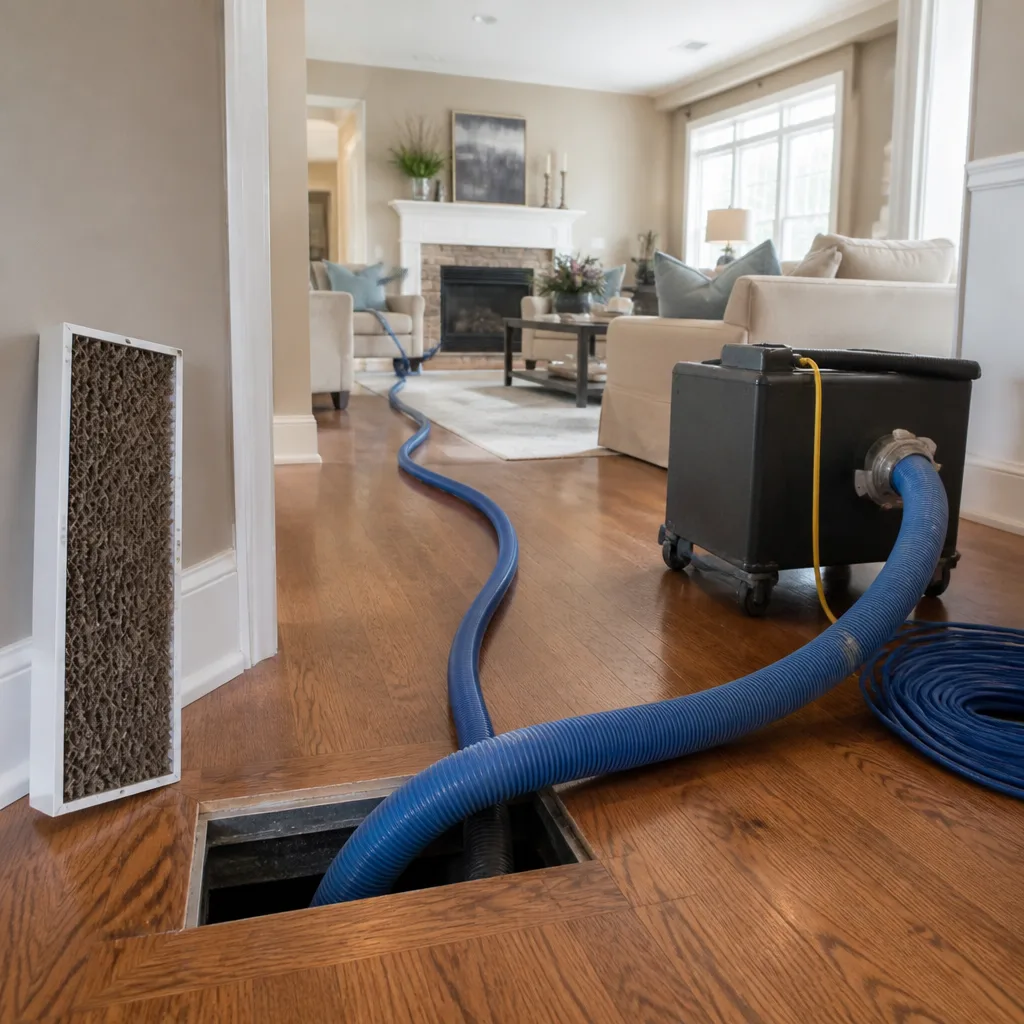 Whole-home duct cleaning
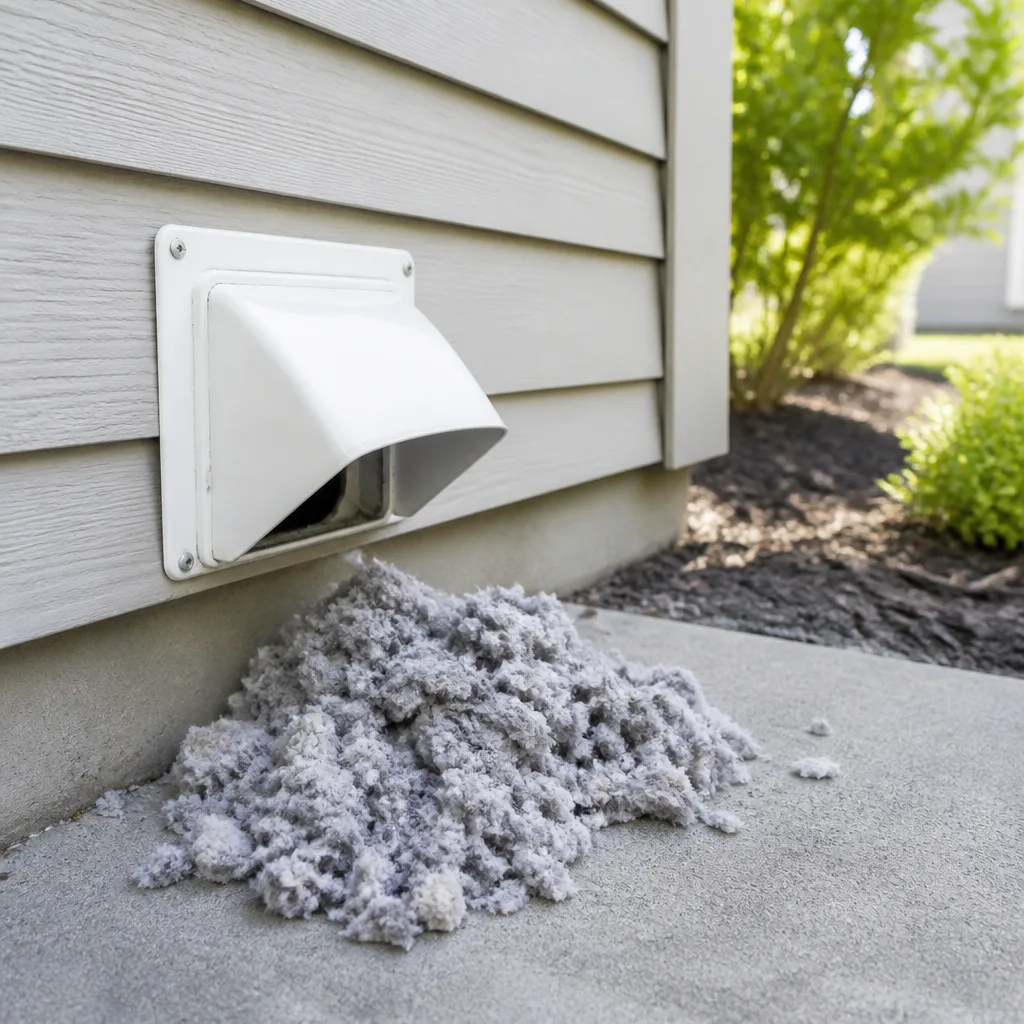 Dryer vent cleaning
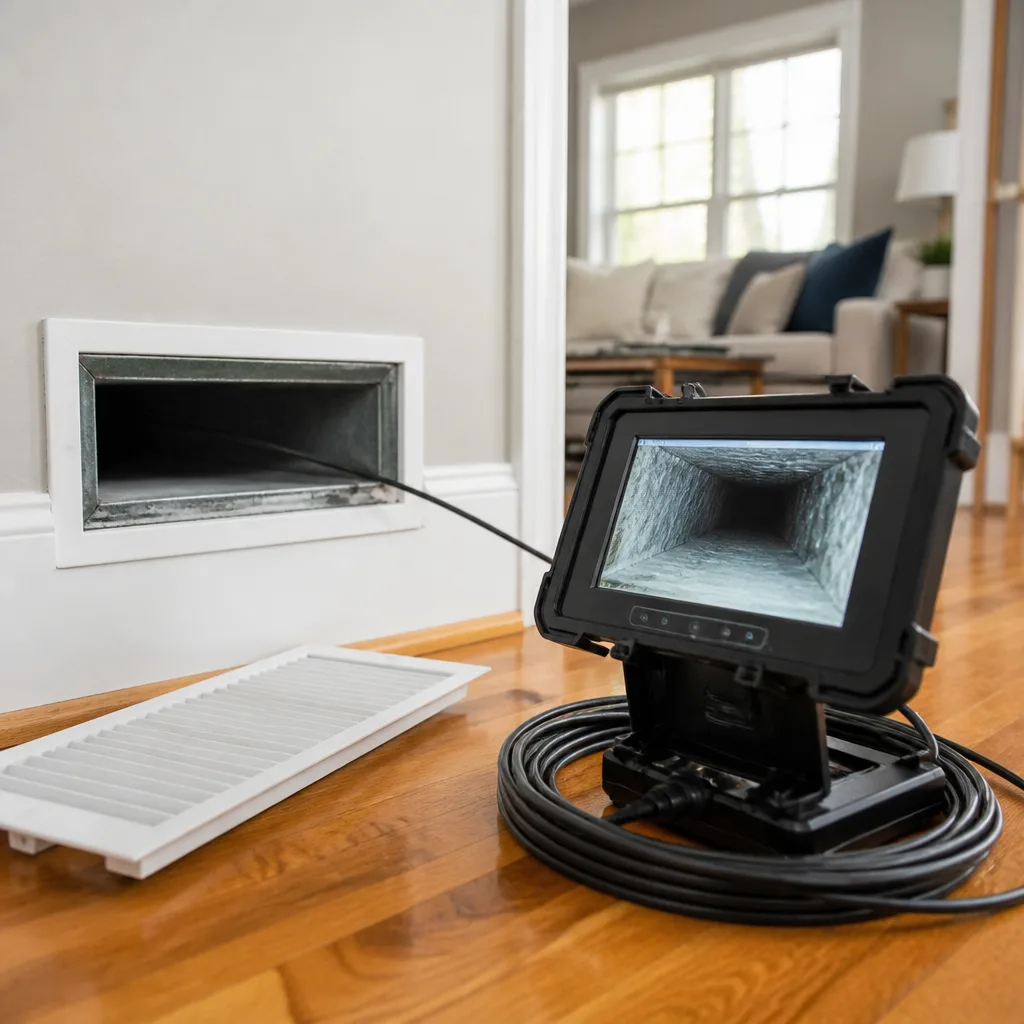 Camera inspection
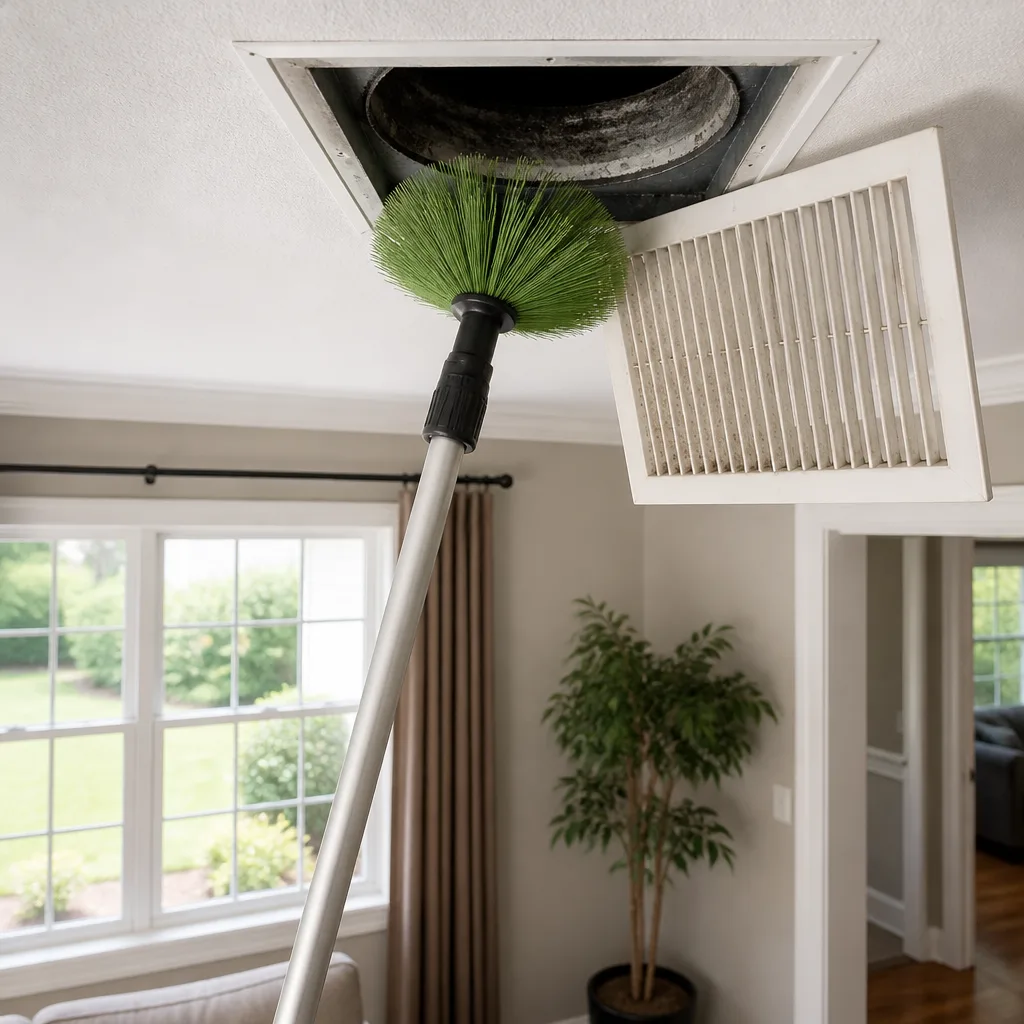 Sanitizing & deodorizing
Whole-system duct and dryer vent check with before-and-after photos - you see exactly what came out of your vents
That "$99 whole-house special" is a bait ad - the real number appears once they are in your hallway, or the "clean" is a shop-vac at the register. We photograph the inside of your ducts before and after instead.
Air Duct Cleaning Permits, Codes & Inspections in Louisville, KY: What You Need to Know
Most homeowners assume duct work is like carpet cleaning: someone shows up, runs equipment, and leaves. Nothing gets filed, nothing gets inspected. That’s true for cleaning. But the moment a technician cuts into a flex run, reconnects a trunk line, or seals a joint with mastic, the job can become permitted mechanical work under Kentucky’s residential code. The trouble is that nothing in the sales conversation usually mentions it, and the contractor’s van is long gone when a buyer’s inspector starts poking around the basement. This guide walks through where Louisville Metro draws the line between cleaning and repair, what inspectors look for, how permit records interact with energy-audit documentation and insurance claims, and the one question every homeowner should ask before anyone touches a duct beyond the vacuum hose.
Quick Answer
Routine air duct cleaning in Louisville does not require a permit. Structural duct work – sealing with mastic, replacing flex runs, modifying connections, or altering the configuration of a supply or return – is treated as mechanical work under the Kentucky Residential Code (based on the International Mechanical Code), and Louisville Metro requires a permit for mechanical alterations. The permit is normally pulled by the licensed contractor performing the work, and the responsibility for unpermitted work at resale falls on the property owner.
Styles & brands we work with
- Whole-home duct cleaning
- Dryer vent cleaning
- Camera inspection
- Sanitizing & deodorizing
Table of Contents
- Cleaning vs. Repair: Where the Permit Line Sits in Louisville
- What Kentucky Mechanical Code Section 603 Actually Covers
- Duct Sealing: Maintenance or Permit-Required Work?
- LG&E Rebates, Energy Audits, and Permit Records
- How Unpermitted Duct Work Affects Homeowner Insurance Claims
- What a Louisville Metro Mechanical Inspection Looks Like
- The One Question to Ask Before Any Work Beyond Vacuuming
- Ductions and the Pre-Sale Inspection
Cleaning vs. Repair: Where the Permit Line Sits in Louisville
Cleaning is not regulated as construction. When we run a rotary contact brush through a supply run and pull the debris back with a HEPA negative-air machine, we are removing material, not altering the system. No permit. No inspection. That’s the job most homeowners picture when they call.
The line moves the instant the work changes the physical system. Louisville Metro’s permitting rules follow the Kentucky Residential Code, which in turn adopts the International Mechanical Code. Under that framework, “mechanical work” covers the installation, alteration, replacement, and repair of duct systems serving heating, cooling, and ventilation. So the practical distinction is:
- Cleaning only – brushing, contact agitation, negative-air extraction, sanitizing the interior surface. No permit required.
- Sealing joints with mastic or metal tape as routine maintenance – generally treated as maintenance if you’re sealing an accessible joint on an otherwise compliant system and it doesn’t change the system’s configuration.
- Replacing a flex run – permit territory. You’re installing a new duct section.
- Cutting in a new supply or return – permit and inspection. Load calculations and register placement matter.
- Rerouting a run or changing the trunk configuration – permit and inspection. This affects static pressure and distribution.
- Sealing significant portions of a system (whole-home duct sealing as part of an energy upgrade) – often requires a permit; ask specifically, because your jurisdiction may treat this as an alteration.
The reason for the caution here isn’t bureaucracy for its own sake. Louisville has a lot of housing stock from the 1950s through 1980s where duct systems were sized for original equipment and later modified repeatedly. An unpermitted cut-in can tank the static pressure and leave the far end of the house starved of airflow. When the inspector sees unfamiliar flex runs spliced with tape and zip ties, the first question is always whether a permit exists.
Have a project that mixes cleaning and repair? The technician should be able to tell you up front which parts need a permit. When we work on air duct cleaning in Louisville, the cleaning portion never needs one, and any structural repair we recommend comes with an honest read on the permitting picture.
What Kentucky Mechanical Code Section 603 Actually Covers
Section 603 of the International Mechanical Code, as adopted in Kentucky, addresses duct systems – materials, installation, insulation, sealing, and support. It’s the section inspectors point to when reviewing duct work during a mechanical inspection. Here’s the practical translation for a homeowner:
- Materials matter. Flex duct must meet specific standards, and it must be installed with proper support spacing and without sharp bends that crush the interior liner. A contractor replacing a run must use the correct product, not whatever was on the truck.
- Sealing is prescribed. Joints, seams, and connections in the duct system are required to be sealed. In conditioned spaces, this applies to the supply and return sides. In unconditioned spaces (attics and crawlspaces), the requirements get stricter.
- Support and sag are regulated. Duct runs can’t be strung across the attic like clothesline. There are support intervals and maximum sag allowances. Inspectors look for this.
- Clearances from combustibles. Ducts serving certain appliances have clearance requirements. This is where DIY work most often gets corrected.
- Insulation requirements. Ducts in unconditioned spaces must be insulated to a specified level. Replacing a run without matching insulation gets flagged.
Louisville’s older neighborhoods – the Highlands, Clifton, Crescent Hill – have a lot of half-attic and crawlspace systems where the original duct work has been patched repeatedly. When the mechanical inspector walks in, they’re checking the current installation against Section 603. If a run was replaced without a permit, they will attribute the deficiency to the current owner.
The important nuance: cleaning is not an “alteration,” so Section 603 doesn’t come into play. Repair, replacement, and modification do. In our experience, most homeowners don’t realize how quickly the boundary lands once a technician touches anything other than the interior surface of the duct.
Duct Sealing: Maintenance or Permit-Required Work?
This is the grayest zone in the whole topic, and it’s where inspectors actually disagree with contractors. Here’s the honest read.
Routine maintenance that stays out of permit territory:
- Sealing an accessible joint or seam at a boot, plenum, or register can during cleaning.
- Applying mastic to a small, isolated leak that was identified during cleaning.
- Re-taping a previously taped joint that failed (with proper UL-listed foil tape, not cloth duct tape).
Work that crosses into permit territory:
- Whole-home duct sealing performed as part of an energy upgrade, especially when tied to an energy audit or rebate program.
- Sealing that requires access cuts – making a hole to reach an inaccessible leak and then sealing it back up.
- Sealing that changes the number or location of supply or return openings.
- Any sealing combined with replacement of a run or a section.
Louisville Metro’s inspectors interpret the line based on scope, not technique. A joint sealed during a cleaning is maintenance. A system-wide sealing project performed to achieve a measurable reduction in duct leakage is an alteration, and it needs a paper trail. If a contractor tells you “sealing never needs a permit,” push back. The correct phrasing from a good contractor is “let me check the scope against the code before we start.”
This is one reason we don’t describe sealing as a casual add-on. When we find a duct with a compromised joint, we document it, explain the scope, and tell you whether the fix is small enough to be maintenance or large enough that a permit and inspection are the right move.
LG&E Rebates, Energy Audits, and Permit Records
LG&E runs residential energy efficiency programs, and like most utility programs, participation requires documentation. When duct sealing is one of the measures included – usually as part of a whole-home energy audit – the paperwork the utility wants to see typically includes a description of the work, contractor information, invoice records, and often post-installation test results.
Where homeowners get tripped up is the intersection with permit records. Here’s the pattern we see:
- The audit identifies duct leakage as a priority. An energy assessor runs a blower door test and a duct leakage test and recommends sealing.
- The sealing work gets done and submitted for the rebate. The contractor does the work and provides the invoice.
- The utility asks for supporting documentation. Depending on the program, that can include a permit or a final inspection from your jurisdiction. Programs vary from year to year, so check the current program requirements directly with LG&E.
- The homeowner discovers the work was done without a permit. If the scope crossed into alteration territory, there’s no permit record to provide. The rebate gets delayed or denied, and the homeowner has to decide whether to pull a retroactive permit.
The lesson: if duct sealing is happening under an energy-audit umbrella, decide up front whether the scope is permit-required. If it is, pull the permit before the work starts. Retroactive permitting is possible in Louisville, but it means an inspection of work that’s already been covered in mastic, which complicates verification.
And before you sign anything, get the current program rules directly from LG&E. Rebate structures and documentation requirements change, and we don’t represent the program. What we can tell you is that our work is documented thoroughly – before-and-after photos, equipment records, and a written scope – precisely because utility programs and future inspections both depend on that paper trail.
How Unpermitted Duct Work Affects Homeowner Insurance Claims
This is the part nobody talks about until there’s a problem. Standard homeowners policies in Kentucky don’t pay for unpermitted work that caused a loss. Most policies have language excluding damage arising from “faulty, inadequate, or defective” workmanship, and unpermitted mechanical alterations fall squarely into that exposure if the work is later found to be the cause of a loss.
Two scenarios matter most for duct work:
- HVAC damage claims. If a poorly executed duct modification causes the system to run under static pressure it wasn’t designed for, and the compressor fails, the carrier may investigate whether the duct work was permitted. If a permit was required and none was obtained, the claim is exposed to denial.
- Indoor air quality claims. Water intrusion into an unsealed duct in a crawlspace can lead to biological growth inside the system. If the duct was modified without a permit and the modification is the reason it’s unsealed or improperly insulated, coverage questions arise.
The other exposure is less dramatic but more common: a homeowner files a claim, the adjuster asks for records of recent mechanical work, and the homeowner has no permit to provide. The claim doesn’t automatically fail, but the carrier’s investigator will treat the unpermitted work as an aggravating factor.
The protection is simple. For any duct work beyond cleaning, either pull a permit (through the licensed contractor) or get written confirmation from the contractor that the scope, in their professional judgment, doesn’t trigger a permit requirement, and keep that confirmation. If you’re unsure, call Louisville Metro’s Department of Codes and Regulations and describe the scope directly. They will tell you what they’d require.
What a Louisville Metro Mechanical Inspection Looks Like
If a permit was pulled for duct work, an inspector from Louisville Metro’s Department of Codes and Regulations will visit before the work gets covered up or commissioned. The inspector’s job is to confirm the installation matches the permit and the code, so the visit is practical, not theatrical. Here’s what typically happens:
- They check the permit. The permit card should be on site, listing the scope and the licensed contractor.
- They measure duct support and sag. Flex duct runs get checked against support spacing and sag allowances.
- They verify sealing and joint integrity. Joints should be sealed with code-compliant materials, not cloth-backed tape or caulk.
- They check insulation levels in unconditioned spaces. If runs were replaced in the attic or crawlspace, the insulation must match the specified level.
- They check clearances from combustibles, especially near furnace connections and appliance vents.
- They confirm register location and count against the permit drawings. Any deviation from the approved plan gets flagged.
- They sign off, or they write a correction notice. Corrections are common on first inspection when support or sealing isn’t up to Section 603. A correction notice isn’t a rejection – it’s a list of fixes the contractor returns to address.
For a Louisville homeowner, the practical takeaway is that these inspections are normal, expected parts of permitted mechanical work. A contractor who treats the inspection as routine is a contractor who’s done this before. A contractor who suggests “we can skip the permit to save time” is telling you something important about how they approach the rest of the work.
The One Question to Ask Before Any Work Beyond Vacuuming
Before you authorize any duct work that isn’t purely cleaning, ask this, and get the answer in writing on the estimate:
“Is this work permit-required, and if so, who pulls the permit?”
The good answers sound like this:
- “The sealing is maintenance – no permit needed, and here’s why.”
- “This flex replacement is a permit-required alteration. We’ll pull it under our contractor license and schedule the inspection.”
The bad answers sound like this:
- “Nobody pulls permits for duct work around here.”
- “We can do it either way – it’s up to you.”
- “You can pull the permit yourself.”
The last one deserves explanation. A homeowner can technically pull a permit in some jurisdictions as an owner-builder, but for hired mechanical work, the permit should be pulled by the licensed contractor – that’s how liability and inspection records end up attributed correctly. If a contractor tells you to pull it yourself, the permit record will show you as the contractor of record, which is not what you want at resale.
We handle this conversation before any repair scope is agreed. Our Dayspring Air Duct Cleaning team identifies what’s cleaning, what’s repair, and what needs permitting, and we put it in the estimate so there’s no ambiguity on the day of work. That’s simply what a professional mechanical contractor does.
Duct Work and the Pre-Sale Inspection
When you sell a house in Louisville, the buyer’s home inspector walks the mechanical systems. Duct work that’s been modified without a permit becomes an item on the report, and the buyer’s agent will use it as leverage. Even if the work was done well, the absence of a permit record makes the work look suspect.
The list inspectors typically flag:
- Flex duct runs spliced with tape instead of proper connectors.
- Runs with obvious sag beyond code allowance.
- Runs replaced without insulation in an attic or crawlspace.
- Newly added supply or return registers with no permit record.
- Mastic applied at joints where the underlying connection isn’t properly fitted.
Homeowners don’t want to hear this, but the reality is that a missing permit is often more expensive to resolve at sale than it would have been to pull upfront. Retroactive permitting requires an inspection of the work in place, and if the inspector finds deficiencies, the work gets corrected before the permit closes. Our Louisville team fields these calls regularly – sellers who need duct work documented and brought into compliance before a closing date.
If you’re buying a home with recent duct work, request the permit history from Louisville Metro. It’s a public record and it’s worth the five minutes.
Common Mistakes to Avoid
- Assuming “duct cleaning” and “duct repair” are the same regulatory category. They’re not. Cleaning is unregulated; repair and replacement are treated as mechanical work and can require permits. Get the answer in writing before work starts.
- Letting a contractor tap a new supply without a permit. It seems minor until the buyer’s inspector finds an undocumented register. Retroactive permitting on an in-place duct is more complicated than doing it correctly upfront.
- Treating mastic sealing as always exempt. Small, isolated joint sealing is maintenance. Whole-home sealing done as part of an energy upgrade can require a permit. Match the scope to the code, not the technique.
- Skipping permit records in rebate documentation. LG&E programs and similar utility rebates typically require documentation of the work. If the scope crossed into alteration territory, a missing permit will stall the rebate. Confirm program requirements before booking the work.
- Hiring a cleaning crew that doesn’t know the code line. A crew that only knows how to run a vacuum won’t flag seal or repair issues, and won’t tell you what needs a permit. Ask directly how the crew handles repair scope.
- Assuming insurance covers unpermitted work. Standard Kentucky homeowners policies exclude loss caused by faulty or defective workmanship. Unpermitted mechanical work sits squarely in that exposure when a claim gets investigated.
- Ignoring permit history before buying a home with recent HVAC work. Request the permit record from Louisville Metro. If the previous owner replaced a run or modified the system and there’s no permit, you inherit the compliance problem.
See the difference
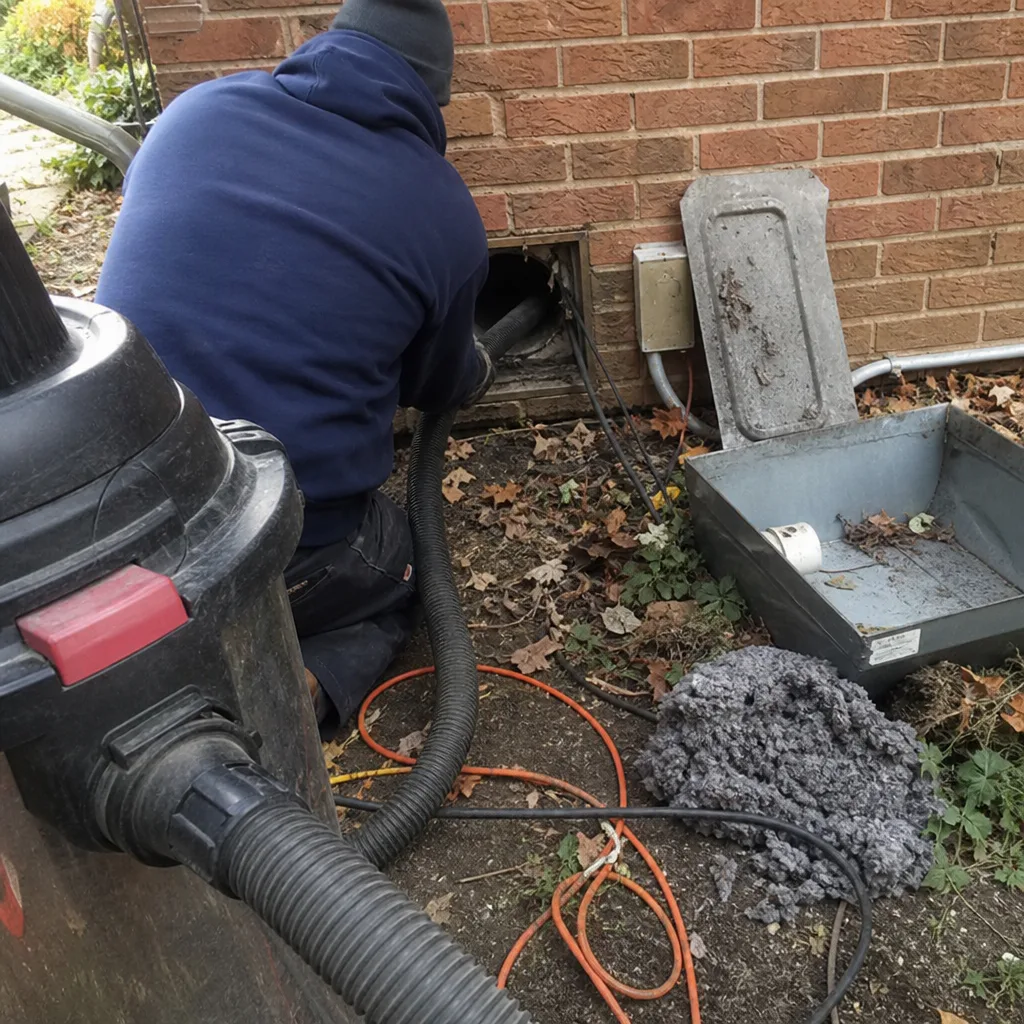 Before
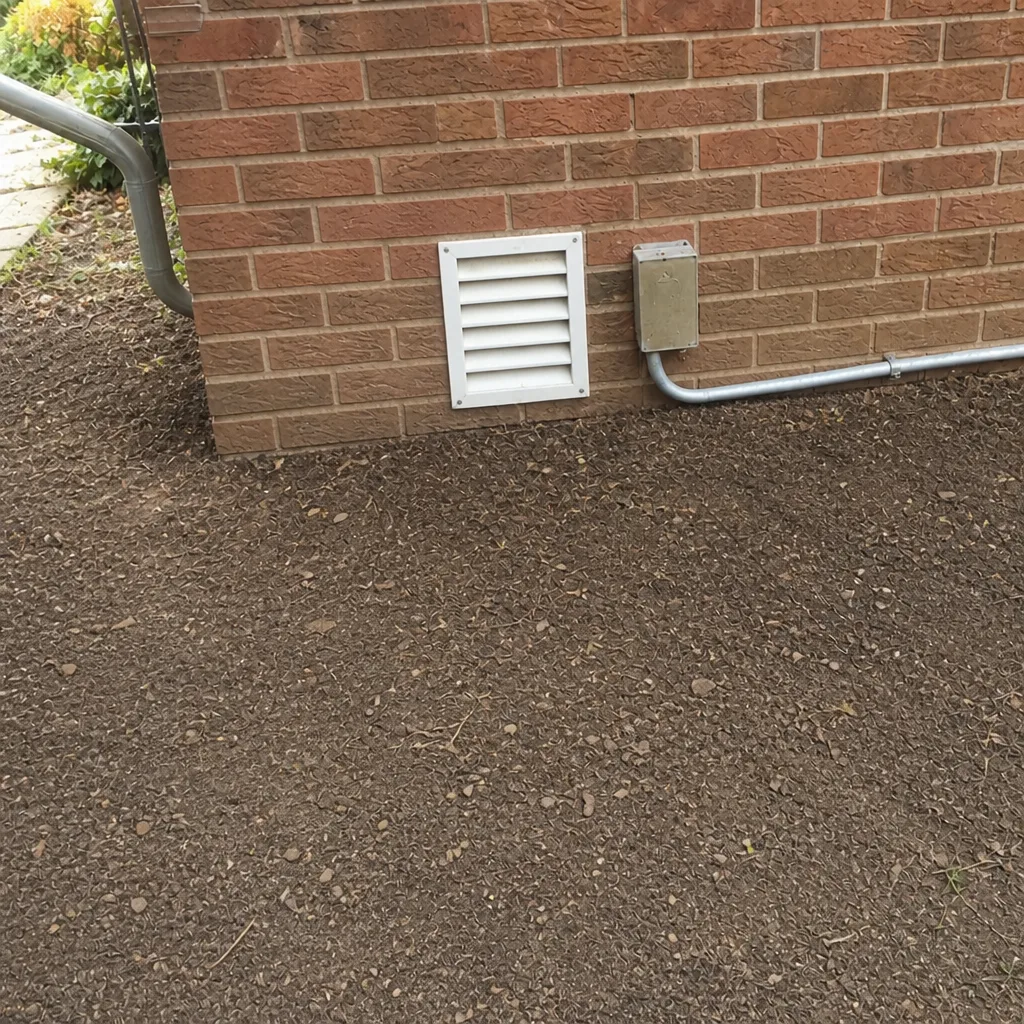 After
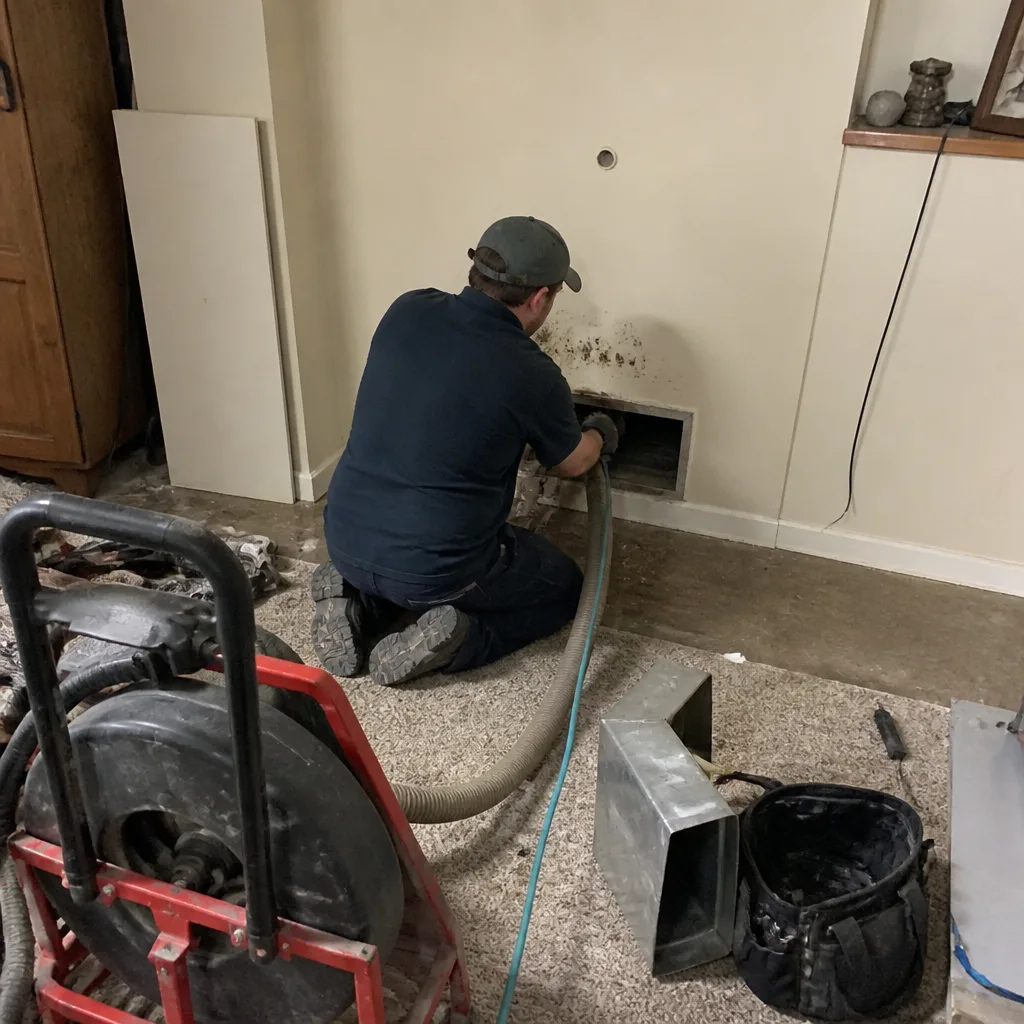 Before
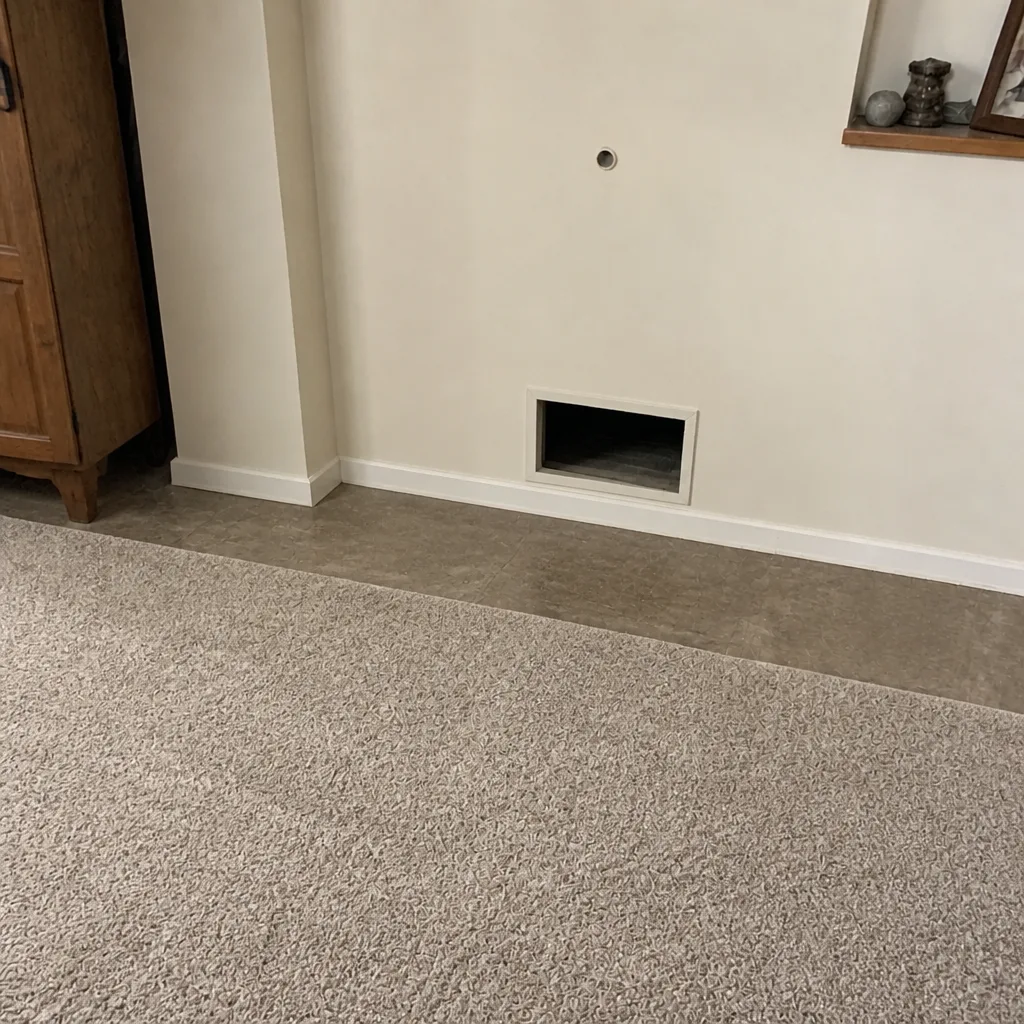 After
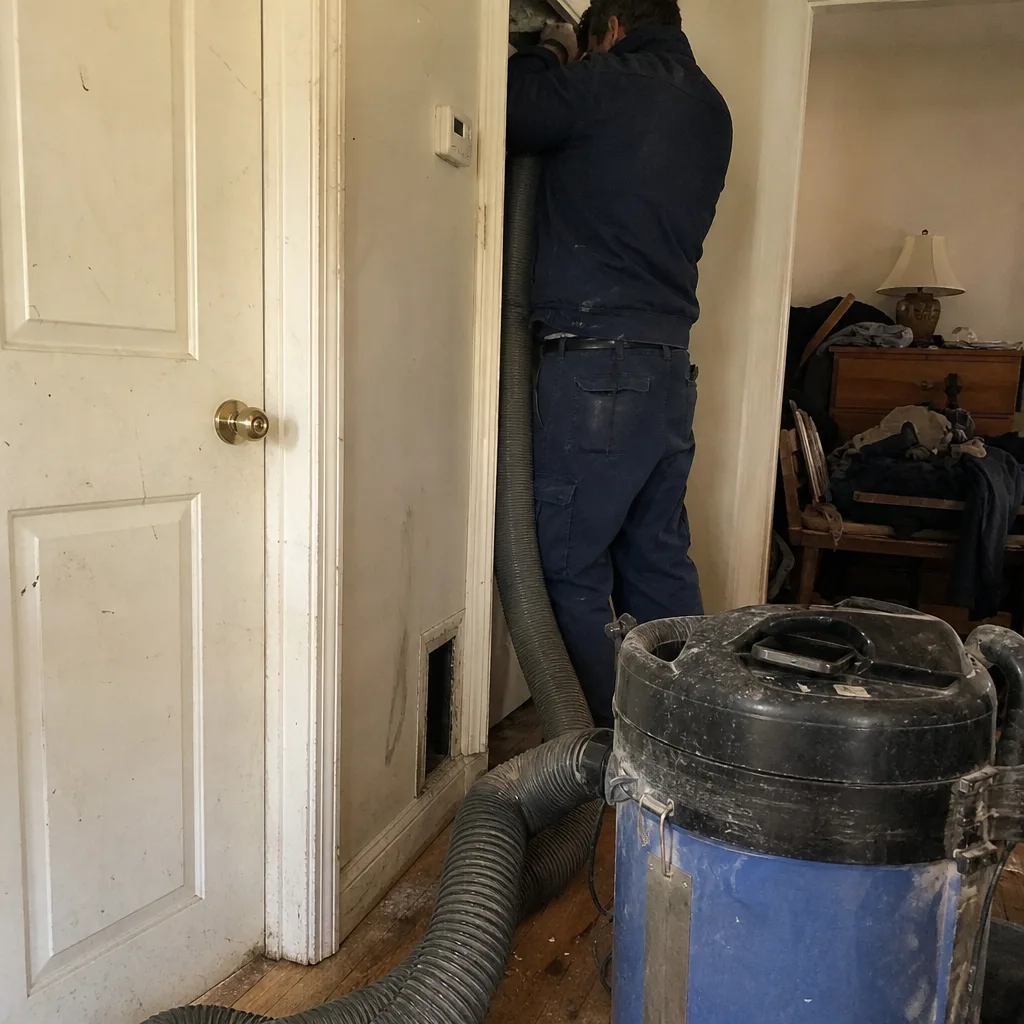 Before
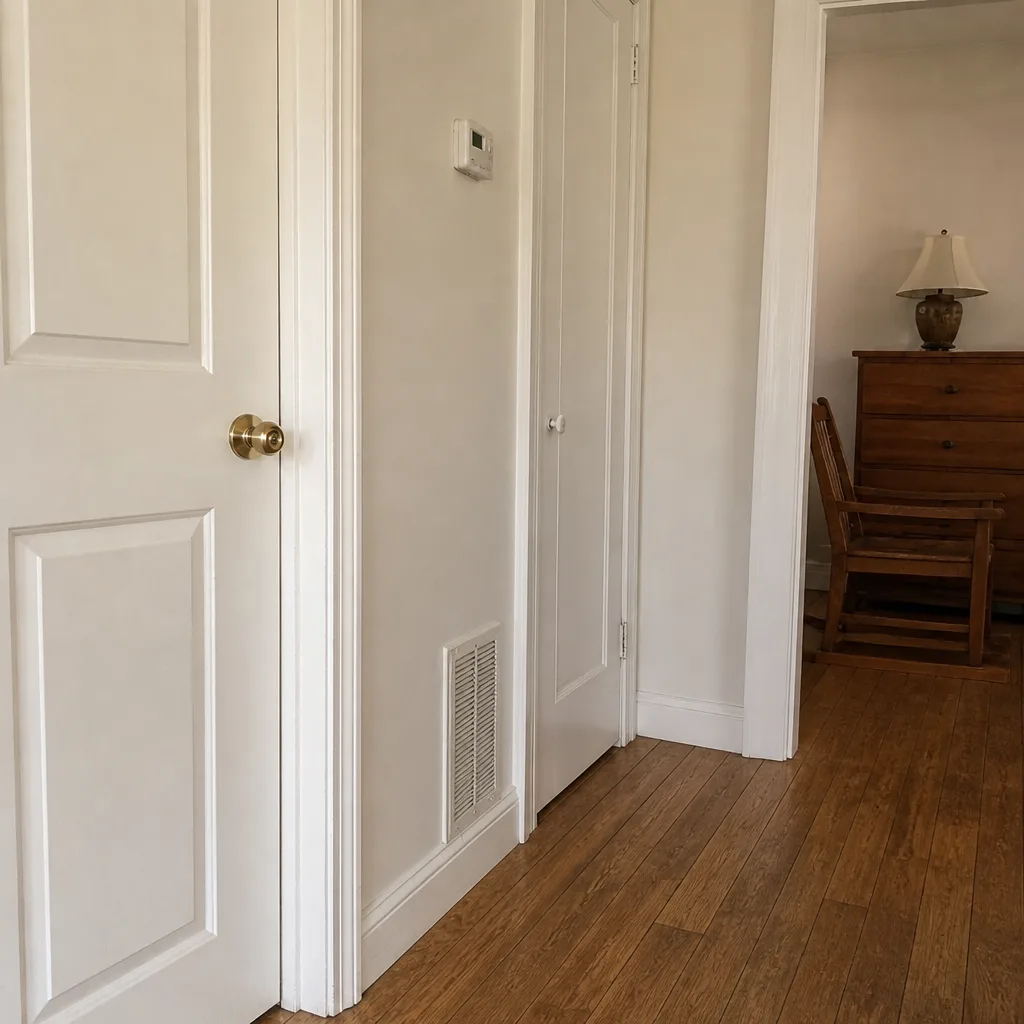 After
When to Call a Professional
Reach out to a professional any time the scope of work moves past cleaning. If you smell mustiness in a specific room, if you see crushed or disconnected flex duct in the attic or crawlspace, if a technician has flagged damage during a cleaning, or if you’re preparing to sell and need to know whether any duct work is undocumented – those are all professional calls. The same is true if a home inspector has flagged duct issues on a purchase report, if you’re planning whole-home sealing around an energy audit, or if you’ve had water intrusion into a duct in a crawlspace.
Dayspring Air Duct Cleaning offers free estimates in Louisville – call (877) 517-3289. We answer 24/7, and we also handle dryer vent cleaning as a separate service when that’s the safety need. If your project involves both cleaning and repair, we scope it honestly up front, including the permit question.
Frequently Asked Questions
No. Routine air duct cleaning – brushing, contact agitation, HEPA extraction, sanitizing the interior surface – does not require a permit in Louisville. The permit requirement kicks in when the work involves structural changes to the duct system, such as replacing a flex run, cutting in a new supply or return, or modifying the trunk configuration.
The licensed contractor performing the work pulls the permit. In Louisville, the permit should be attributed to the mechanical contractor’s license, not to you as the homeowner. If a contractor tells you to pull a permit yourself as an owner-builder for hired work, that’s a red flag – it shifts liability and compliance responsibility to you.
It depends on scope. Sealing an accessible joint with mastic during cleaning is generally maintenance and doesn’t require a permit. Whole-home duct sealing as part of an energy upgrade, or sealing that requires access cuts or changes the number of supply or return openings, generally crosses into permit territory. Ask the contractor to confirm the scope against the code before work begins.
Request the permit history from Louisville Metro’s Department of Codes and Regulations. Mechanical permits are public records, so you can check whether any duct alteration was permitted. A home inspector can also flag suspect work – taped splices, unsupported runs, and uninsulated replacements in the attic or crawlspace are the common indicators. Call (877) 517-3289 if you want a free estimate on bringing suspect work into compliance.
It can. Standard policies exclude loss caused by faulty or defective workmanship, and unpermitted mechanical alterations fall into that exposure when a claim gets investigated. If a duct modification causes HVAC damage or an indoor air quality problem, the carrier may treat the missing permit as an aggravating factor. Keeping permit records or written scope confirmations protects your claim footing.
LG&E efficiency programs typically require documentation of the work, and when duct sealing is part of an energy-audit scope, that can include permit or inspection records. Confirm current program requirements directly with LG&E before booking the work. If the duct sealing scope is permit-required, pull the permit before work starts so the paperwork lines up – and call (877) 517-3289 for a free estimate on the cleaning or repair portion.
The Bottom Line
Cleaning your ducts in Louisville doesn’t require a permit, and it shouldn’t. But structural duct work – replacing a run, adding a register, sealing a whole system as part of an energy upgrade – is mechanical alteration under Kentucky’s code, and it requires a permit. The contractor performing the work pulls it, not the homeowner, and the paper trail matters at resale, at insurance-claim time, and when rebate documentation is submitted. The one question to ask before any work past vacuuming: “Is this work permit-required, and if so, who pulls the permit?” Get the answer in writing. Call (877) 517-3289. We answer 24/7. Fast dispatch from 7am to 7pm, Sunday through Friday.
Written by the team at Dayspring Air Duct Cleaning, serving Louisville since 2013.