
Last updated November 14, 2026
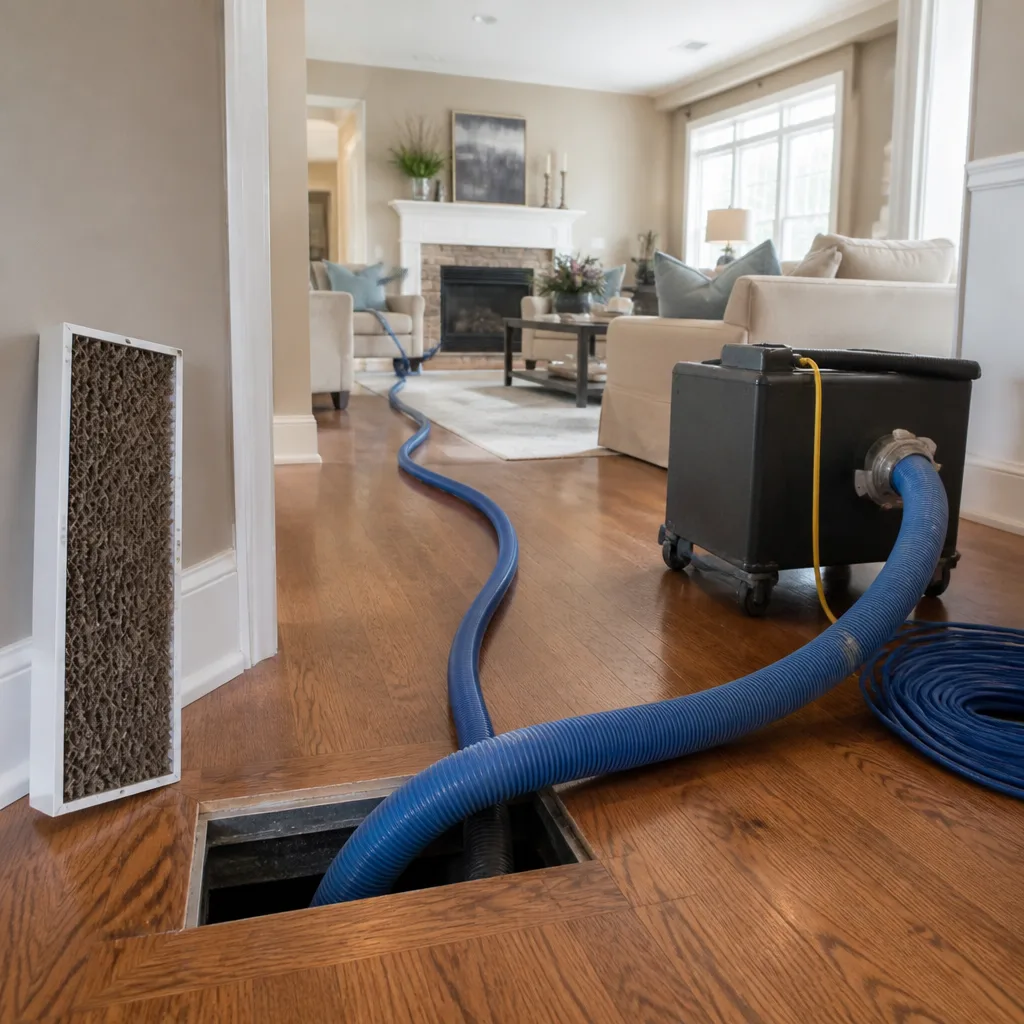 Whole-home duct cleaning
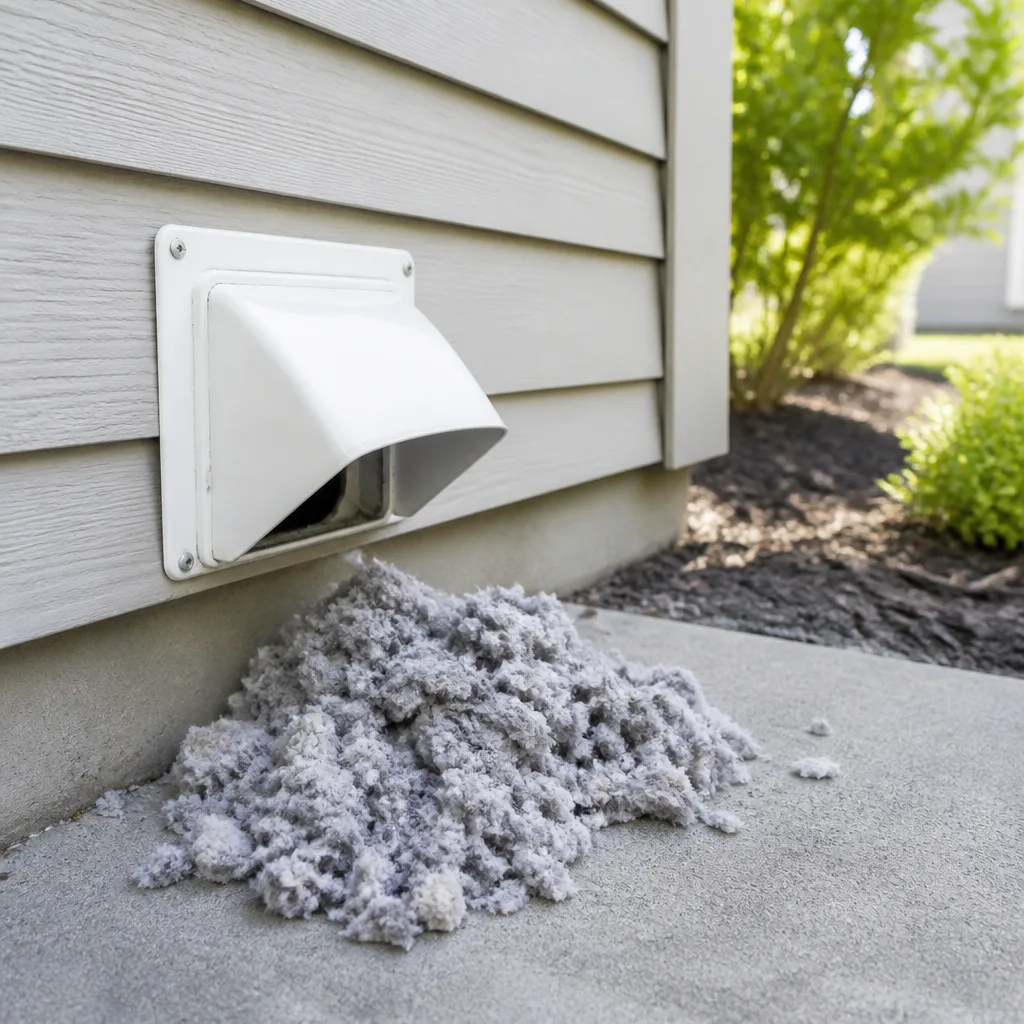 Dryer vent cleaning
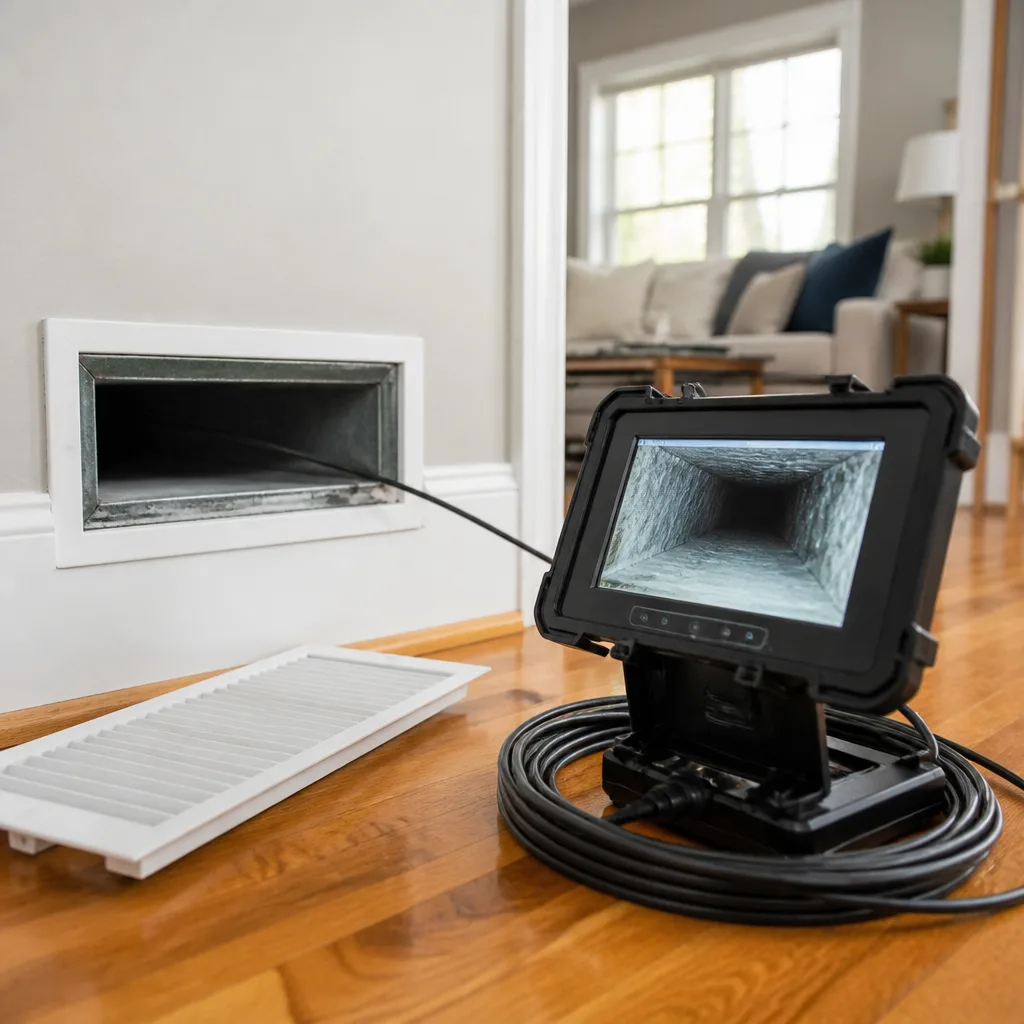 Camera inspection
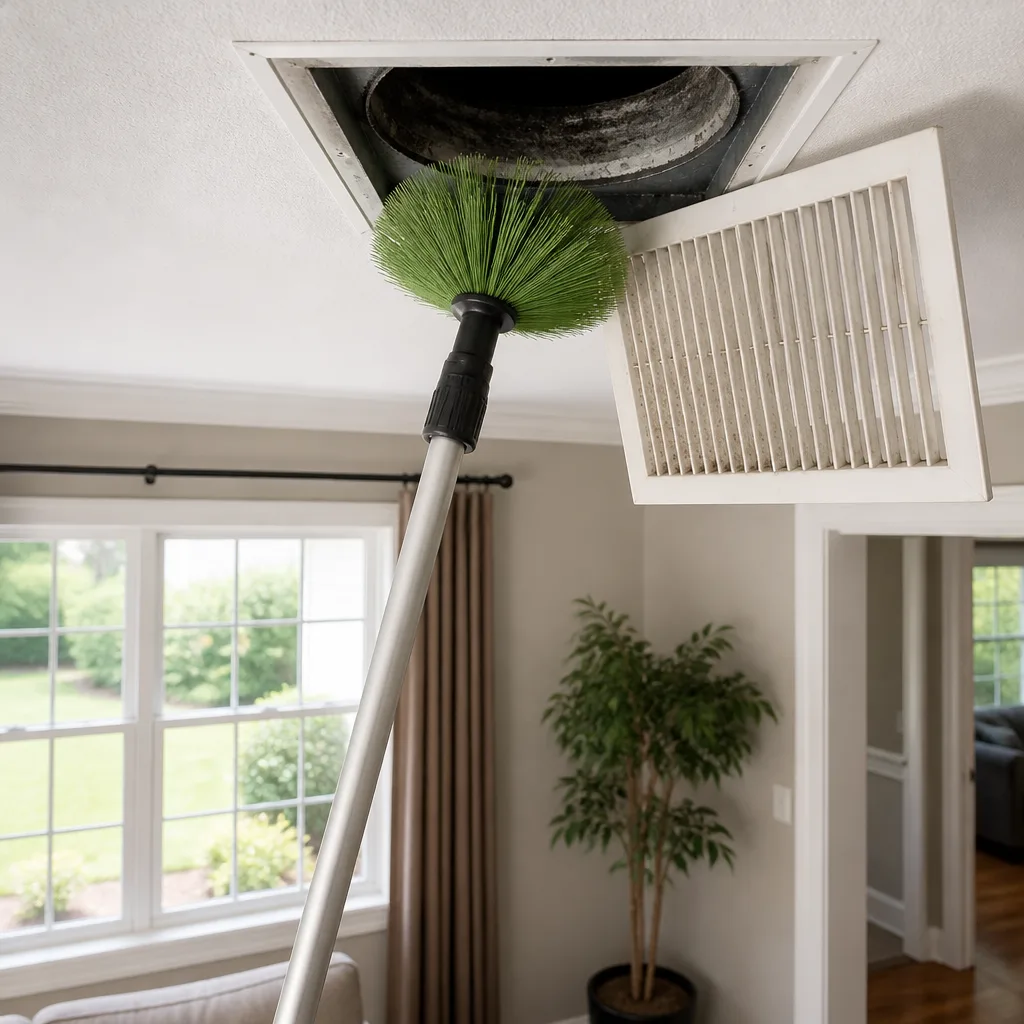 Sanitizing & deodorizing
Whole-system duct and dryer vent check with before-and-after photos - you see exactly what came out of your vents
That "$99 whole-house special" is a bait ad - the real number appears once they are in your hallway, or the "clean" is a shop-vac at the register. We photograph the inside of your ducts before and after instead.
Air Duct Cleaning Warning Signs: A Louisville Homeowner’s Reference Guide
The duct problems that do the most damage in Louisville homes rarely announce themselves. No dramatic odor, no visible mold on the ceiling, no dramatic collapse of the system. Instead they arrive as patterns you’ve already quietly explained away: a fine film of dust on the coffee table three days after you wiped it, a bedroom that never quite matches the rest of the house, a faint smell when the heat first kicks on in October. Those are not quirks of an old house. They’re often the ductwork telling you something is wrong. This guide walks through the warning signs worth taking seriously, what each one usually points to, and how to tell a cosmetic annoyance from a structural air problem.
Quick Answer
The most reliable air duct warning signs in Louisville homes are dust that returns within 2-3 days of cleaning, rooms that run several degrees warmer or cooler than the thermostat setting, musty smells timed to the start of heating or cooling season, rust or black staining around supply registers, sagging flex duct in the attic or crawlspace, and energy bills that climb during mild spring or fall months when the system barely runs. Any one of these is worth an inspection; two or more pointing the same direction usually means a duct leak, a return-side bypass, or debris buildup that needs professional attention.
Styles & brands we work with
- Whole-home duct cleaning
- Dryer vent cleaning
- Camera inspection
- Sanitizing & deodorizing
Table of Contents
- Dust That Comes Back Within Days: When It’s Normal and When It Isn’t
- Uneven Room Temperatures in Louisville Split-Level and Ranch Homes
- What Musty Smells Tell You, Depending on the Season
- What You Can See: Rust, Black Rings, Sagging Ductwork
- Why Mild-Month Utility Bills Sometimes Point to Duct Leakage
- Allergy and Air Quality Signals Worth Noticing
- How a Real Duct Inspection Works
- Deciding Between Cleaning, Repair, or Both
Dust That Comes Back Within Days: When It’s Normal and When It Isn’t
Some dust after a professional cleaning is completely normal. Opening registers, agitating years of settled debris, and running the system afterward always loosens a little residual material. Expect a light film on surfaces for a few days, then a gradual settling into whatever your home’s baseline is. What matters is the pattern over the following two weeks.
The problem pattern is a rapid return to a heavy coating of dust on horizontal surfaces – a coffee table, a nightstand, the top of a picture frame – within two to three days of cleaning. That speed isn’t housekeeping. It’s usually unfiltered air entering the living space from somewhere it doesn’t belong. In Louisville homes, the most common culprit is a return-side leak: a gap or disconnected joint on the return duct, often in a crawlspace, attic, or utility closet, that pulls unconditioned air straight out of that cavity and delivers it back to the supply side of the system. Every cycle through the blower deposits another layer of whatever that cavity contains onto your furniture.
Here’s how to tell the two apart:
- Normal: a light, even film across surfaces that fades over a week or two, with no change in your home’s typical cleaning rhythm.
- Warning sign: a heavy, fast coating that returns to the same surfaces within days, especially if it’s darker or grittier than before.
- Also watch: streaks on the wall or ceiling above a return grille, which often mark a leak that’s been pulling dust-laden attic or crawlspace air.
This is a duct integrity issue, not a filter problem. A better filter slows down the symptom; it doesn’t close the leak. Proper air duct cleaning in these cases starts with identifying where the leak is before any cleaning work begins.
Uneven Room Temperatures in Louisville Split-Level and Ranch Homes
If one room stays stubbornly warm in summer and chilly in winter while the rest of the house is comfortable, the thermostat is usually the last thing at fault. In Louisville’s split-level and ranch housing stock – especially homes built between the 1960s and 1990s where long trunk runs and tight attic ductwork are common – the cause is usually a duct balance or leakage problem. The system is delivering conditioned air, but a portion of it is leaking before it reaches the register, or it’s being sent in proportions that don’t match what each room actually needs.
The signs that distinguish a duct problem from a thermostat problem:
- The uncomfortable room’s register has noticeably weaker airflow than others in the house.
- Closing the door to the room makes the problem worse (a return-side issue, in many cases).
- The room’s temperature swings get wider during extreme heat or cold rather than staying consistent.
- You can feel a draft near the room’s register even when the system is off.
A thermostat reading that never matches any room in the house – systematically off by several degrees – is a separate issue and worth having checked. But when the distress is localized to one or two rooms while the rest is fine, start with the ductwork.
Good duct balancing isn’t just about closing registers. It’s about finding where the leaks are, sealing or repairing them, and adjusting the system so each space gets what it was designed to receive. That’s a repair job first, and a cleaning job second. It’s why we treat air duct repair as a core service rather than an occasional add-on. If you want to know how ducts should be handled before considering work from anyone, our Dayspring Air Duct Cleaning page walks through the whole process.
What Musty Smells Tell You, Depending on the Season
Odor is the easiest signal to notice and the easiest to misread. The timing of a musty smell carries real diagnostic weight, and the two seasons point to different problems.
A musty smell at the first heat-startup in late fall or early winter usually comes from what’s sitting on the heat exchanger and in the ductwork after the cooling season. Condensation on the evaporator coil during summer, mixed with settled dust, can encourage microbial growth in the drain pan and on nearby components. When the heat comes on for the first time, that material gets heated and releases an odor through the supply ducts. A mild smell on the first day of use that fades is normal. A musty smell that persists for a week or more, or that recurs every time the heat cycles on, points to buildup the system can’t clear on its own.
A musty smell during cooling season is generally a different beast. In Louisville’s humid summers, moisture is a constant pressure on the system. A smell that shows up with the AC and lingers for the whole cooling season typically points to a wet component: a saturated filter, condensate sitting in a pan that isn’t draining properly, or ductwork in a humid crawlspace pulling damp air into the supply side. That last case is a duct leak problem, not a cleaning problem alone. Sealing the leak is the fix; cleaning afterward clears the accumulated residue.
A persistent smell that doesn’t follow the seasons at all – present year-round – most often comes from debris inside the ductwork itself, or from something the ducts are exposed to, like a damp basement or a nearby dryer vent clog that’s backdrafting. Those need to be traced to the source, not masked.
What odor is not, in our experience, is a reason to start with air fresheners or duct sprays. If the air smells off, something in the system is generating it. A real inspection finds it.
What You Can See: Rust, Black Rings, Sagging Ductwork
Some of the most revealing clues require no tools – just a flashlight and a few minutes at each register. Louisville homeowners can check these today.
Rust around the grille or on the duct surface
Rust at a supply or return register signals one of two things: condensation forming on a cold duct in a humid space (common in crawlspaces and unconditioned attics), or a slow water intrusion near that duct run. Either way, rust means moisture, and moisture near ductwork is a problem worth fixing before it grows. In our humid Louisville summers, condensation is the more common of the two, but the only way to know is to have someone look at the duct itself, not just the grille.
Black rings or soot-like staining around a register
A dark ring of fine black particles around the outside of a supply register is a sign of airflow leakage. Air is escaping around the grille frame, carrying fine particles that deposit on the wall or ceiling in a ring pattern. It’s the visible footprint of a duct-to-register joint that isn’t tight. In most cases this is fixable – the register can be reseated and the boot sealed – and doing it reduces both the dust load in the room and the wasted conditioned air.
Sagging or collapsed flex duct
Flexible ductwork is common in Louisville attic and crawlspace runs, and over time it can sag, kink, or pull loose from its connection. A sag in a run reduces airflow to whatever register it feeds. A kink can cut airflow almost entirely. Both are visible if you can access the space – look for duct runs that hang below their normal line, droop between supports, or run at a sharp bend. A visibly crushed flex run behind a register is a strong sign that whatever room it serves isn’t getting the air the system was designed to deliver. That’s a repair item, not just a cleaning item.
None of these signals require you to crawl into an attic yourself to interpret. But knowing what they look like helps you describe the problem accurately when you call – and helps you spot them again if they recur.
Why Mild-Month Utility Bills Sometimes Point to Duct Leakage
The clearest billing signal of duct problems isn’t a bill that spikes during a July heat wave or a January cold snap. It’s a bill that climbs during the shoulder months – April and October in Louisville – when the system is running lightly and costs should be at their lowest. If those mild months are costing you more than they used to, or more than you’d expect given the lightness of the load, that’s worth investigating.
Here’s why: duct leakage wastes conditioned air at a fairly steady rate. When the system works hard, that waste sits behind a big number and is easy to miss. When the system works easily, the waste becomes a larger share of a smaller total. It stands out. A home with a leaking return in the attic or crawlspace that pulls in 90-degree or 40-degree air year-round is constantly asking the equipment to recondition air it shouldn’t have to touch. During shoulder months, that overhead shows up more clearly on the bill.
Utility bills also climb for other reasons – a dirty filter, a failing capacitor, a compressor cycling more often – and those are separate diagnoses. But when the rise is a mild-month pattern rather than an extreme-weather pattern, and it comes with one of the other warning signs in this guide, duct leakage deserves to be at the top of the list.
We don’t claim to predict what any given bill should be – local rates, rates structures, and home size all vary. What we can tell you is that duct leakage is one of the few energy losses you can actually find and fix, rather than just absorb.
Allergy and Air Quality Signals Worth Noticing
Airborne health symptoms are the hardest warning signs to interpret, because they can come from many causes. But some patterns point toward the ductwork more directly than others.
- Symptoms that are worse in one room than the rest of the house. That points at a supply-side problem specific to that room’s duct run.
- Symptoms that begin about 15-20 minutes after the HVAC system starts running. That timing suggests something is being delivered to the living space with each cycle.
- Symptoms that clear up when you’re away from home for a few days and return when you come back. A home-specific source rather than an outdoor seasonal one.
- A new baby, a newly diagnosed allergy, or a recent asthma increase in the household. These are legitimate reasons to inspect, not overreact.
We’re not doctors and we don’t diagnose health conditions. What we can do is inspect the system so the homeowner and their physician have better information about what’s actually circulating through the house. Naming the equipment we use matters here: our Rotobrush contact-cleaning system and Nikro HEPA negative-air extraction are the same classes of professional equipment used in commercial indoor air quality work, and they’re built to clean with the system contained rather than blowing contaminants into the room. Homeowners with filtration and air-quality equipment already installed – Honeywell, Aprilaire, or Abatement Technologies units, for example – benefit from a cleaning process that doesn’t work at cross-purposes with those systems. We’re set up to work with what’s in your home, not around it.
How a Real Duct Inspection Works
A useful duct inspection isn’t a walk-through with a clipboard. It’s a step-by-step process that identifies what’s in the system, where air is escaping, and what needs repair versus what just needs cleaning. Here’s the sequence we walk through, and the sequence any professional inspection should follow.
- System walkthrough. Every register, every return, and every accessible duct run gets looked at. That means attic and crawlspace access, not just the supply grilles in the living room.
- Inside-the-duct inspection. A camera or physical inspection of the interior of the main trunk and branch runs, to see the actual condition of the duct lining, the level of debris, and whether moisture is present.
- Leak and bypass check. Joints, boots, and connections are checked for gaps and disconnections, especially on the return side. This is where the rapid-resoiling dust problem gets traced to its source.
- Airflow check at the registers. Airflow is measured at supply and return grilles to confirm whether the system is delivering what it was designed to deliver to each space.
- Written findings and scope. A clear explanation of what was found, what cleaning will address, and what repairs are needed – before any work begins. The written scope is the whole point.
- Cleaning and repair as needed. Cleaning with professional-grade equipment (Rotobrush contact cleaning, Nikro HEPA negative air) and repair of anything found during inspection, without having to schedule a second contractor.
If an inspection skips any of these steps, ask why. In our experience, the most common reason a cleaning “didn’t take” is that the inspection phase was too thin to catch the leak that was causing the problem in the first place.
Deciding Between Cleaning, Repair, or Both
The right answer isn’t always “clean the ducts.” For a homeowner looking at one or more warning signs, the useful question is whether the system needs cleaning, repair, or both. Here’s how the decision usually breaks down.
- Cleaning alone is the answer when the ducts are genuinely dirty (heavy debris visible in the trunk, high dust loads indoors, odor from debris) but the ductwork itself is intact and the airflow is even room to room.
- Repair alone is the answer when the ductwork has a leak, a disconnected joint, a crushed flex run, or a failed return connection, but the interior of the ducts is otherwise in reasonable shape.
- Cleaning and repair together is the most common scenario for homes with dust-return patterns, uneven room temperatures, or a smell that won’t resolve. You have to repair the leak before cleaning, or the cleaning just re-contaminates the system. This is why we handle air duct cleaning and air duct repair under one roof – one crew, one scope, one written price.
- Dryer vent cleaning is a separate service altogether, but worth pairing when the timing works. A clogged dryer vent is a top cause of residential fires according to the NFPA, and it’s not something to defer. We’re glad to handle dryer vent cleaning on the same visit as an air duct cleaning in most Louisville homes.
What we avoid is selling cleaning to someone who needs a repair, or selling a repair to someone whose ducts are simply overdue for a proper cleaning. The written scope settles which is which. There’s no per-vent pricing, no coupon-driven teaser, and no surprises once the crew arrives – one flat price per system, agreed before work begins.
Common Mistakes to Avoid
- Assuming the filter will handle it. A higher-MERV filter catches more particles in the airstream but doesn’t close a leak that’s pulling attic or crawlspace air into the system. If the dust returns fast, the problem is behind the filter.
- Blaming the thermostat for uneven rooms. In Louisville’s older split-level and ranch homes, an unbalanced system almost always traces to duct runs, not to a thermostat setting that drifted out of calibration. Check airflow at the registers first.
- Opting for a cheap coupon duct cleaning with no inspection. The cleaning itself is only worth doing if the system is intact. A vacuum with no diagnostic step can’t catch the return leak that’s actually causing the dust problem, and the “clean” gets undone within weeks.
- Ignoring a persistent musty smell during cooling season. In Louisville’s humid summers, a smell during cooling season often means moisture inside the system. Deferring it lets moisture-related problems spread into duct lining and nearby components.
- Skipping the dryer vent. A clogged dryer vent is a fire risk and an easy service to overlook. If it’s been more than a couple of years, or the dryer isn’t drying as fast as it used to, treat the vent cleaning as a safety item rather than a convenience.
- Assuming a clean-out today solves a problem that’s actually structural. If the same symptom returns within weeks – dust, odor, uneven temperatures – the first visit needs a re-inspection, not another cleaning. The right fix is at the source.
- Hiring a company that only cleans. If the crew can’t repair a leak they find, you’ll be making a second call to a second contractor – and paying for another inspection. It’s better to work with a crew that handles the full system.
See the difference
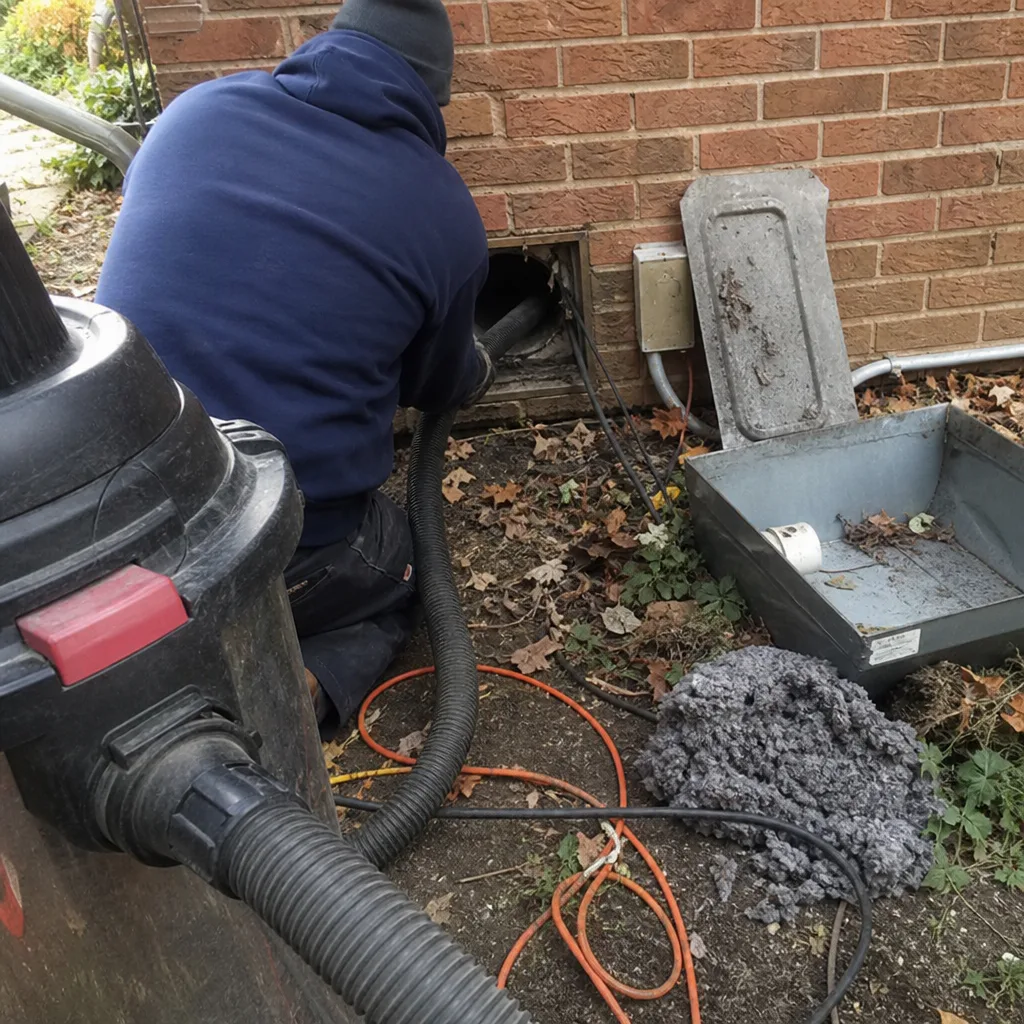 Before
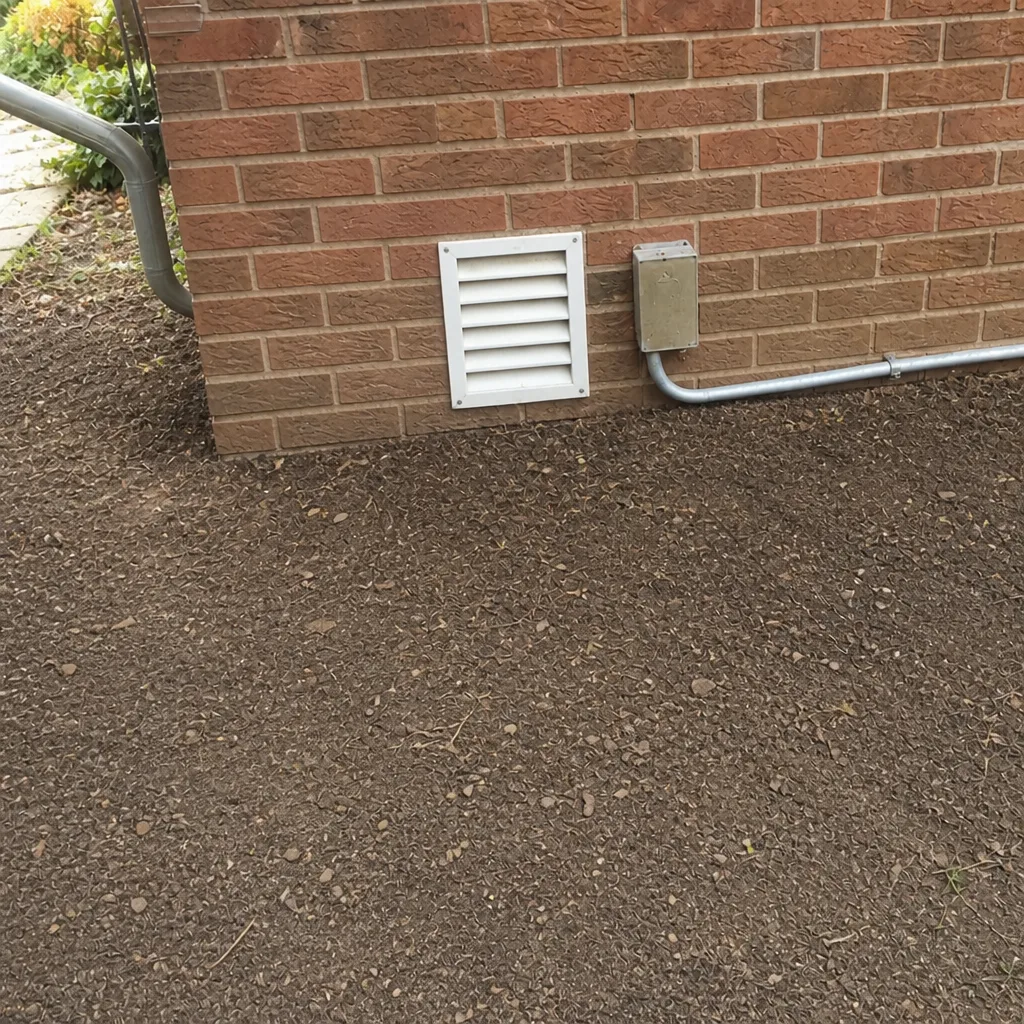 After
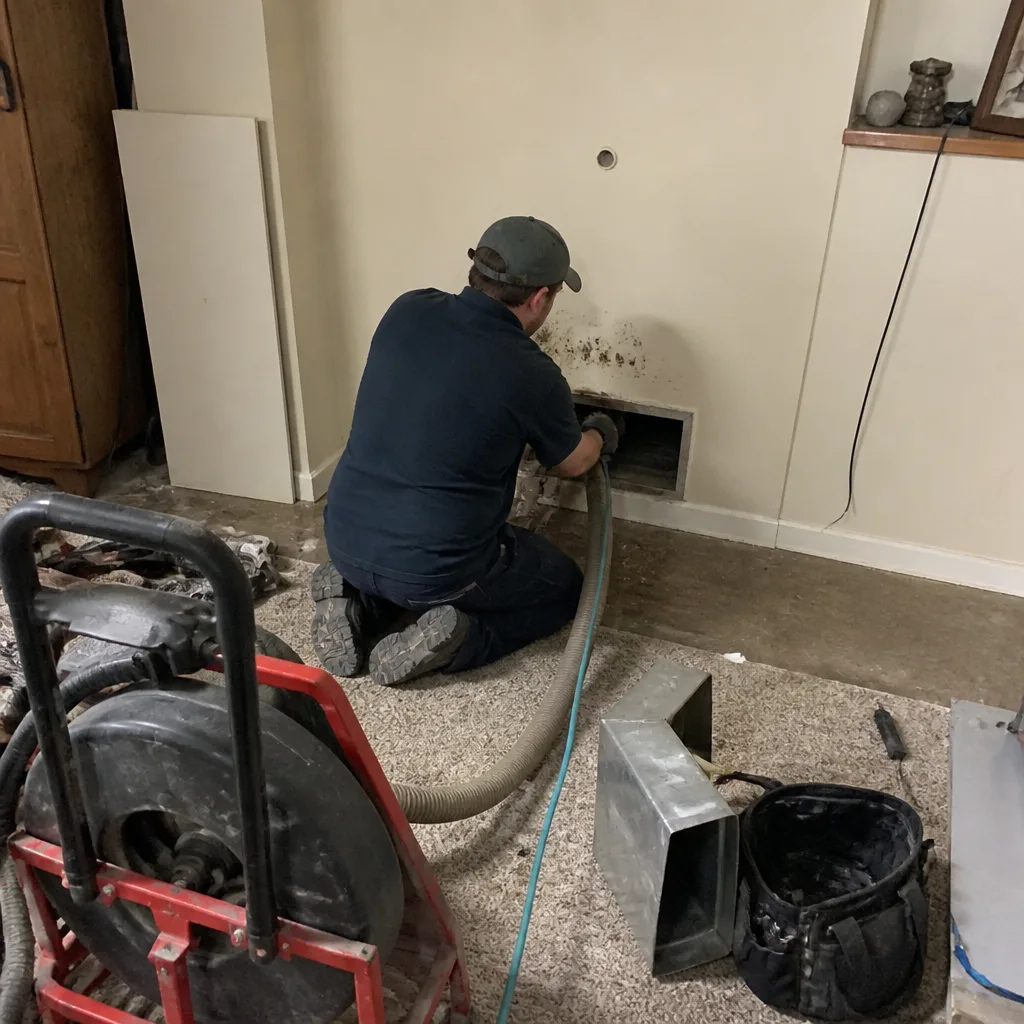 Before
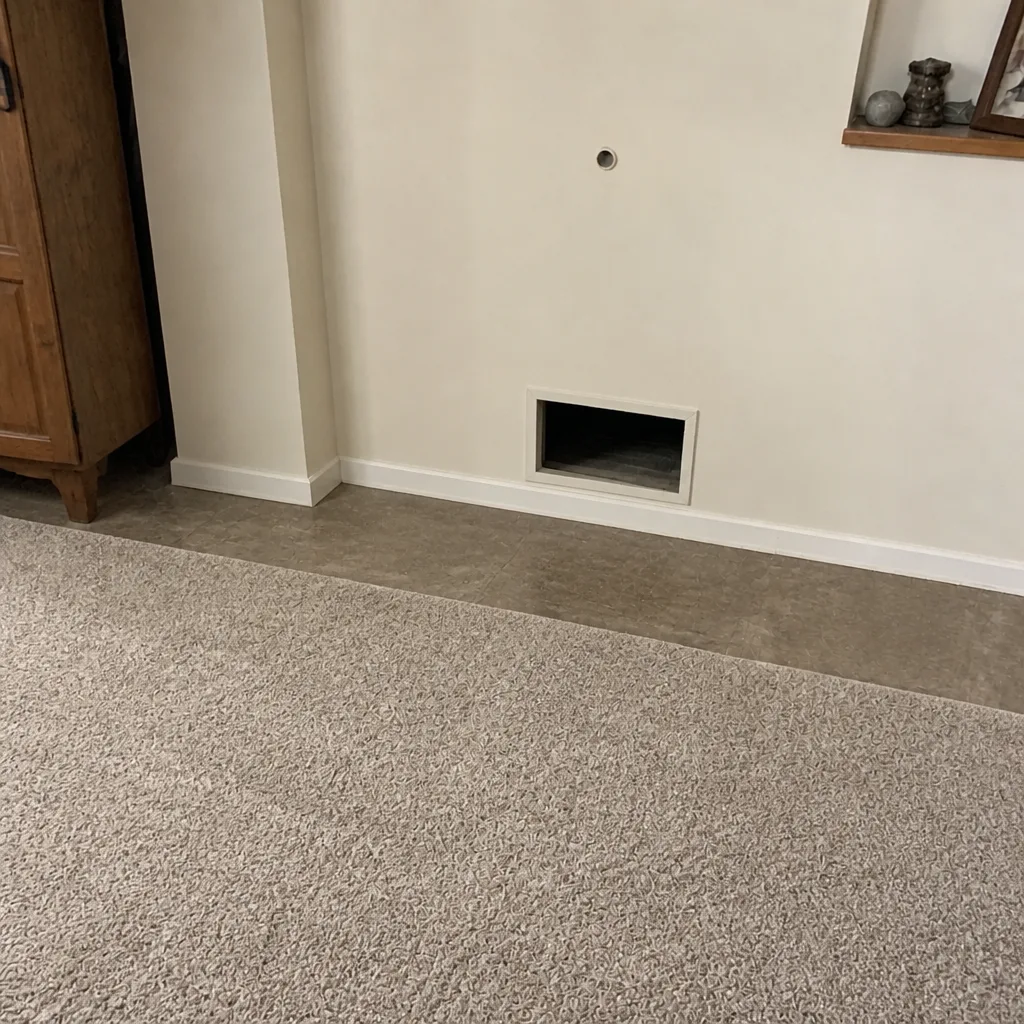 After
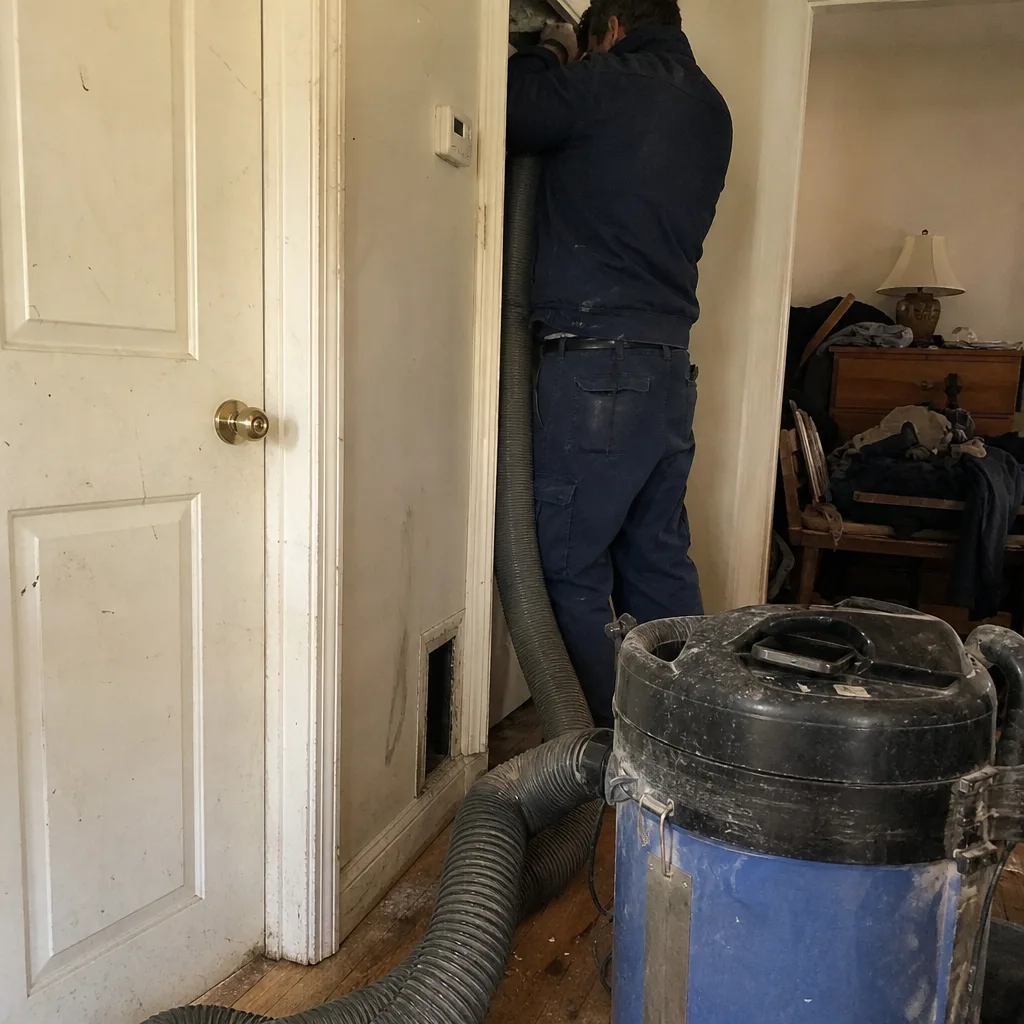 Before
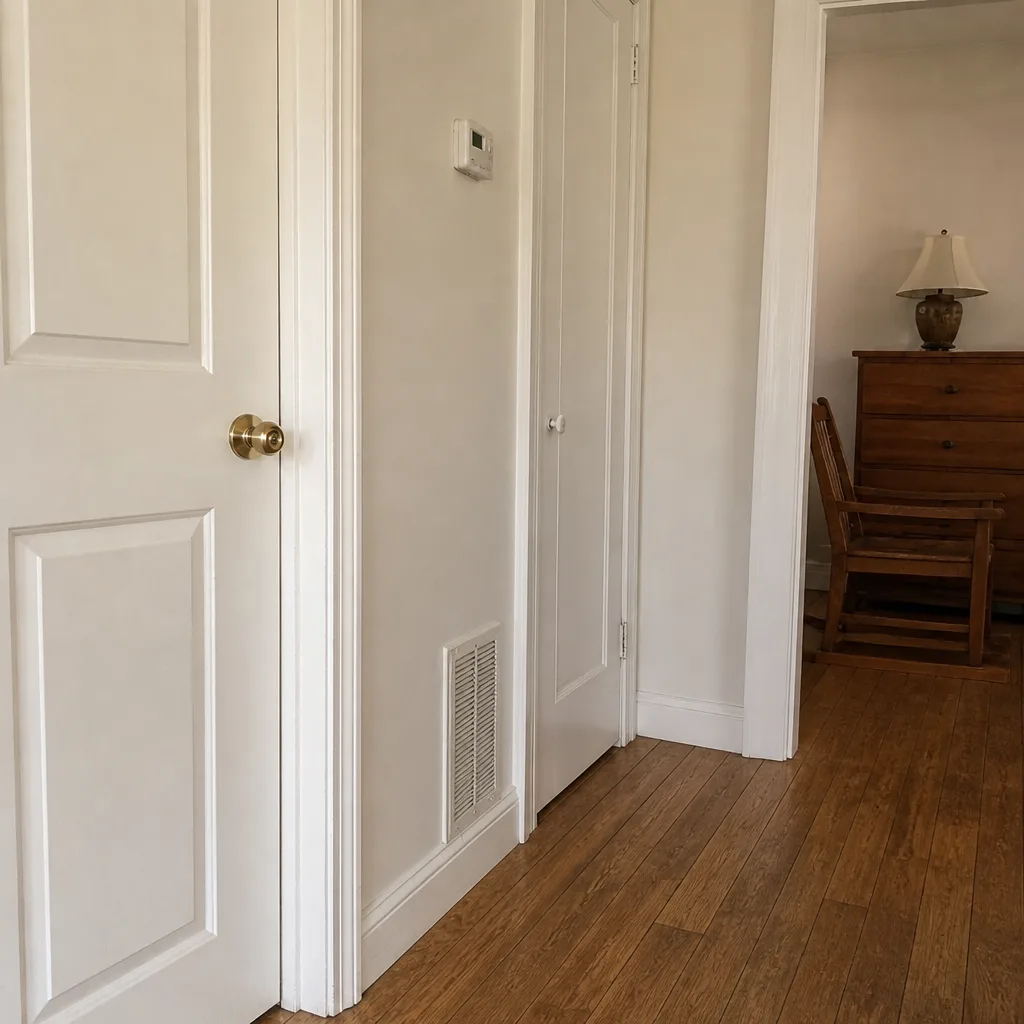 After
When to Call a Professional
Some warning signs are worth a call regardless of what else is going on: dust that returns within 2-3 days of cleaning, a musty smell tied to either heating or cooling season, one room persistently out of step with the rest of the house, visible rust or black staining around registers, sagging or kinked flex duct, or bills that climb during April or October rather than in extreme weather. Any one of these is a reasonable reason to have the system looked at. Two or more pointing the same direction is a strong case for it. We answer 24/7 on the phone line, and we dispatch Sunday through Friday, 7am to 7pm, closed Saturday. Same-day visits are often possible. Dayspring Air Duct Cleaning offers free estimates in Louisville – call (877) 517-3289.
Frequently Asked Questions
Air duct cleaning in Louisville is priced per system, not per vent, and the price is set by a written estimate after an inspection. The estimate sets the final price, and there’s no per-vent surcharge once the crew arrives. Call (877) 517-3289 for an exact quote – estimates are free.
Because they’re often quoting a different scope. A low teaser price usually buys a surface pass at the registers without a proper inspection of the trunk or return side, which is where most of the real problems hide. The reason a cheap cleaning “doesn’t take” is that nothing was found or repaired, just vacuumed. We quote the whole job on a written scope so you can compare quotes fairly – and call (877) 517-3289 if you’d like us to look before you commit to anyone.
Before-and-after photos of your own ducts are the standard. Ask any company to show you the interior of the ductwork before the cleaning begins and again after, and to explain what was found on the inspection. If a company can’t show you the inside of the system, that’s information you should act on. We show what’s inside the system before we start, and we don’t expect you to take it on faith.
It depends more on the household than on the calendar: pets, recent renovations, a new baby, allergies in the family, or an older home with dusty ducts move it up; a clean, filter-maintained home with intact ductwork can go years between cleanings. If the warning signs in this guide are showing up, that’s a stronger signal than the calendar. Call (877) 517-3289 for a free estimate if you’re unsure.
Yes. Repair is a core service, not a referral. If we find a disconnected return, a torn flex run, or a joint that isn’t sealed, we fix it as part of the same scope. That’s one of the reasons we’re set up with professional-grade equipment and work alongside installed components from Honeywell, Aprilaire, and Abatement Technologies.
I live in a Louisville split-level and my upstairs stays hot in summer. Is that a duct problem?
Usually, yes. Split-level and ranch homes are more prone to duct balancing issues than newer builds, and the upstairs run typically loses more conditioned air to leakage than the lower-floor runs. A proper inspection measures airflow room to room and checks for leaks before recommending repairs. Call (877) 517-3289 for a free estimate on a Louisville inspection.
The Bottom Line
The air duct warning signs that matter most in Louisville homes are patterns, not events. Dust that returns within days, a single room that never matches the rest of the house, a musty smell timed to the start of heating or cooling, rust or black rings around a register, sagging ductwork, mild-month bills that don’t add up. Any one of them is a reasonable reason to inspect. Get the written scope. Get the before-and-after photos. Make sure whoever shows up can repair what they find, not just clean around it. And if you’re in Louisville and ready to look, our team handles cleaning, repair, and dryer vent work together – call (877) 517-3289 for a free estimate. We answer 24/7. Fast dispatch from 7am to 7pm, Sunday through Friday.
Written by the team at Dayspring Air Duct Cleaning, serving Louisville since 2013.