
Last updated November 14, 2026
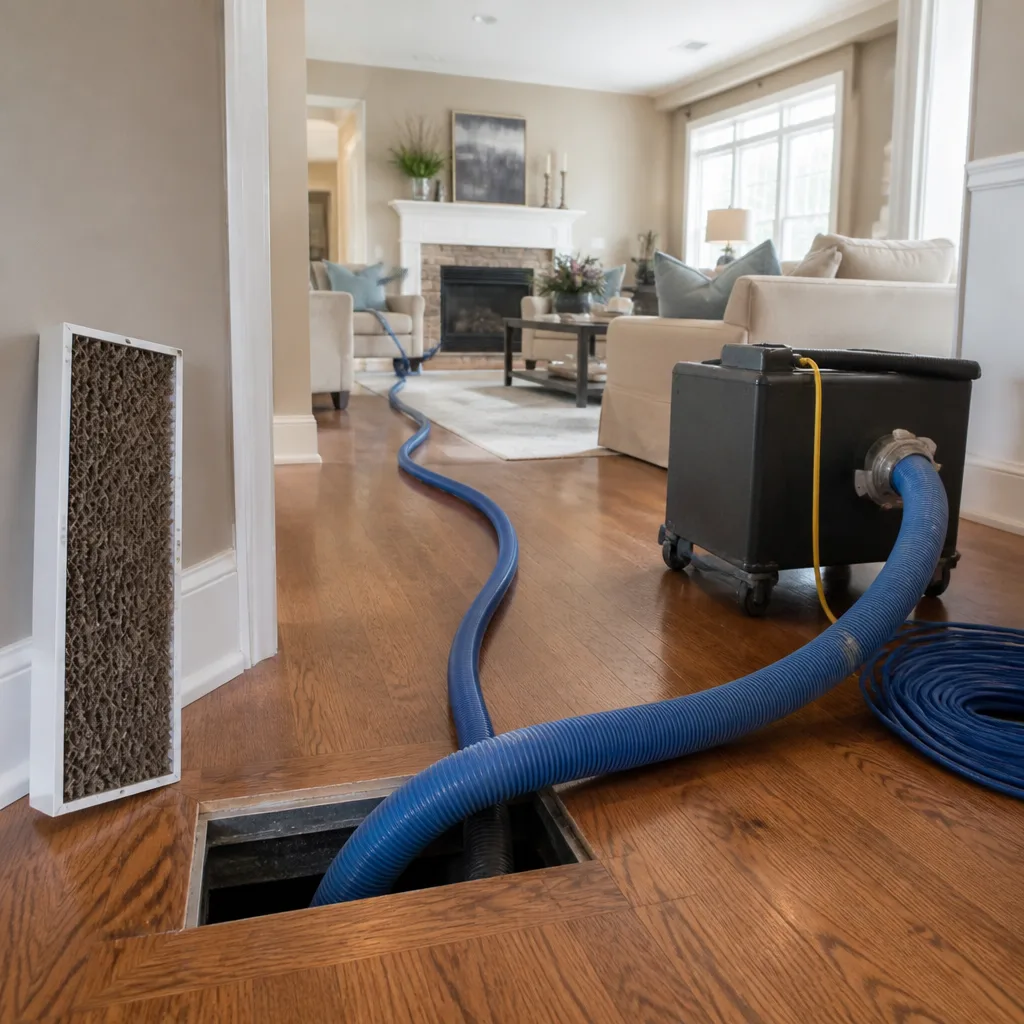 Whole-home duct cleaning
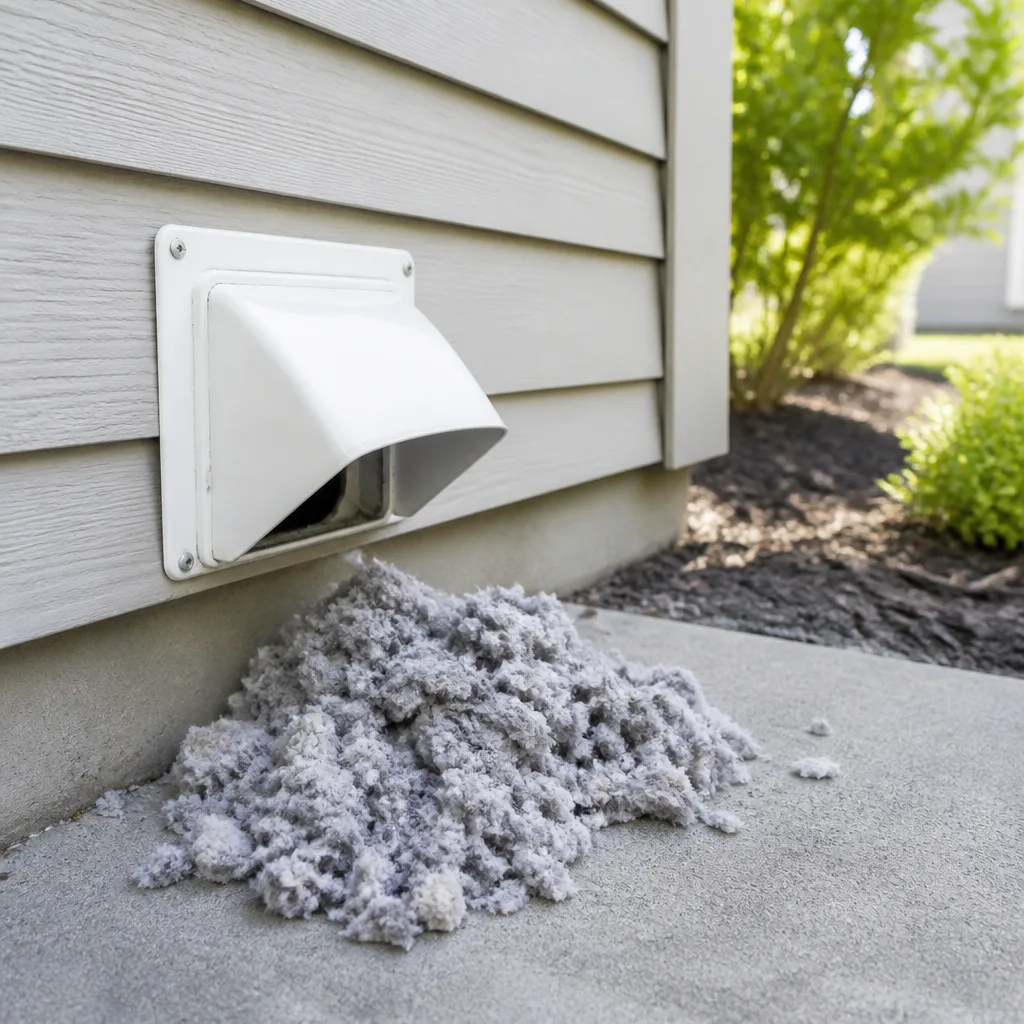 Dryer vent cleaning
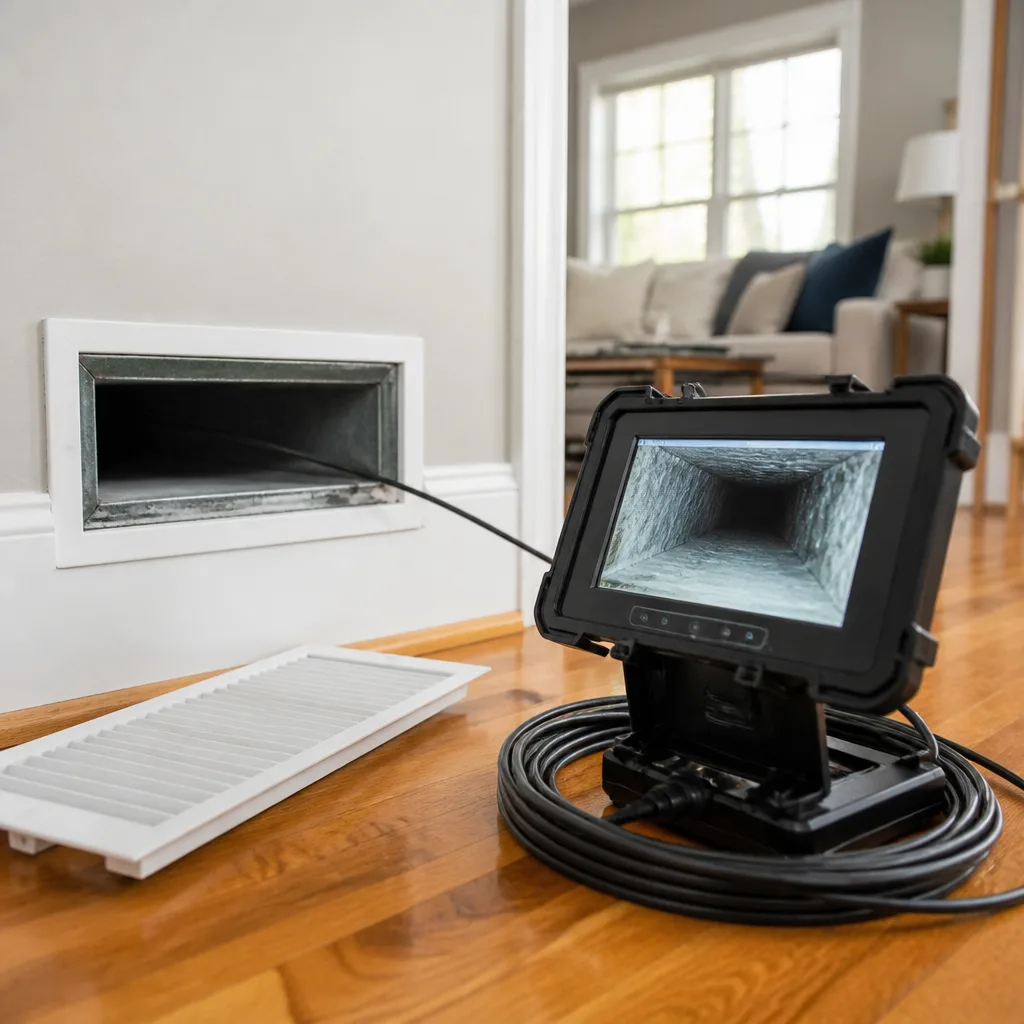 Camera inspection
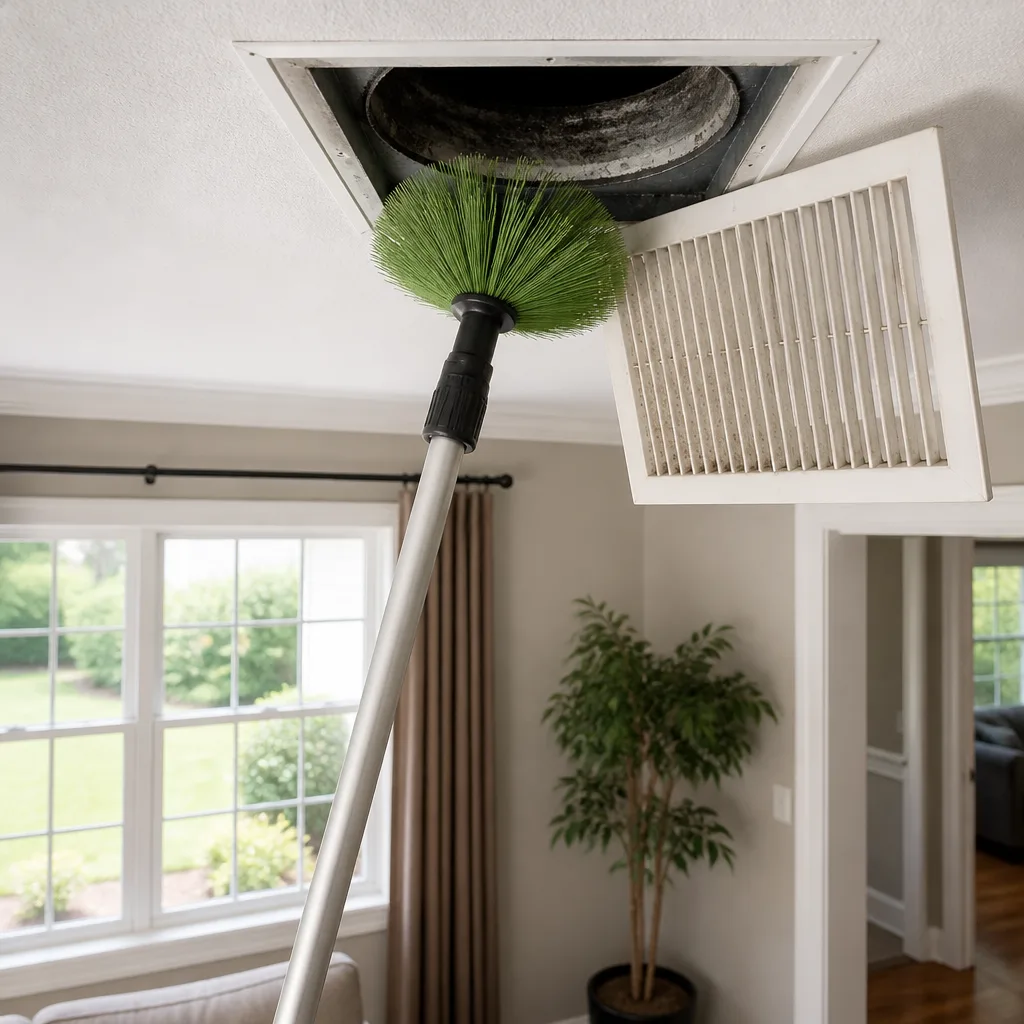 Sanitizing & deodorizing
Whole-system duct and dryer vent check with before-and-after photos - you see exactly what came out of your vents
That "$99 whole-house special" is a bait ad - the real number appears once they are in your hallway, or the "clean" is a shop-vac at the register. We photograph the inside of your ducts before and after instead.
Air Duct Cleaning Troubleshooting in Louisville: Common Problems and How to Fix Them
If one room in your house always runs about 5°F warmer than the thermostat setting, the problem usually isn’t your furnace. It’s a collapsed flex duct, a disconnected trunk line, or a damper stuck half-closed somewhere in the run feeding that room. No filter change will solve it, and no vacuum truck will either. That’s the counterintuitive truth about most duct complaints: homeowners assume the equipment is failing when the actual defect lives in the ductwork itself. In this guide, we’ll teach you how to read your symptoms accurately, map them to likely causes, and document what you find so that any technician you call can diagnose the real problem fast. We’ll cover how Louisville’s humidity shapes duct failures, what you can safely check yourself, and when a cleaning job is really a repair job.
Quick Answer
Weak airflow, uneven room temperatures, and persistent dust are usually duct-system defects rather than HVAC equipment failures. A dirty duct needs cleaning, but a damaged duct, such as collapsed flex, disconnected joints, or torn liner, needs repair before cleaning can help. Diagnose the symptom first by checking airflow at each register and inspecting accessible ductwork with a flashlight before you call anyone.
Styles & brands we work with
- Whole-home duct cleaning
- Dryer vent cleaning
- Camera inspection
- Sanitizing & deodorizing
Table of Contents
- How Do You Tell a Dirty Duct From a Damaged Duct?
- Reading Your Airflow Patterns
- Dust Distribution and Odor Clues
- Cleaning Problems vs. Structural Problems
- Why Louisville Humidity Damages Flex Duct Liner
- Where to Look With a Flashlight
- What You Can Document Before Calling
- When to Call a Professional
How Do You Tell a Dirty Duct From a Damaged Duct?
A dirty duct and a damaged duct can produce similar complaints, but they behave differently under scrutiny. Think of it this way: dirt restricts flow gradually and affects the whole system with a slow decline, while damage creates an abrupt, localized problem that shows up as a single bad room or a sudden drop in pressure at one register. Our technicians read those distinctions before we ever attach a machine.
Here’s how the two categories split apart in practice:
- Dirty duct: Airflow is weak everywhere but roughly equal at each register. Dust is visible on supply diffusers and collects along baseboards. The house feels stuffy. A musty but consistent smell lingers.
- Damaged duct: One or two rooms are noticeably worse than the rest. Airflow at a specific register is dramatically weaker or stronger. You might hear whistling, rattling, or a rush of air from an unexpected spot. Dust settles unevenly, concentrated near the failure.
The distinction matters because the fix is different. A dirty duct needs professional cleaning with negative-air equipment. A damaged duct needs repair, and if you clean a damaged system first, you may spend money on a vacuuming job that never addresses the real cause. We handle duct repair and cleaning as one service, which means we can fix what we find rather than handing you a report and pointing you toward another contractor. That single-crew approach saves a second call and a second diagnostic visit, and it’s one reason we built our Dayspring Air Duct Cleaning process around inspection first.
Reading Your Airflow Patterns
Airflow tells you more about duct health than almost anything else you can observe without tools. Before you call anyone, walk through the house room by room and hold your hand in front of each supply register. Note where the flow is strong, weak, or absent. You’re looking for the pattern, not a single reading.
- Test every supply register in the house, one at a time, with the system running on fan only. Record what you feel: strong, medium, weak, or nothing.
- Compare rooms of similar size. If two similar bedrooms have wildly different airflow, something between the trunk and the register is off.
- Check the return vents. Weak return suction starves the whole system, and that can masquerade as low supply airflow.
- Listen for noise. Whistling at a register suggests an undersized opening or a crushed duct behind the wall. Rattling suggests a loose connection.
- Note the pattern: uniform weakness points to a dirty system or a struggling blower, while localized weakness points to damage in that specific run.
Uniform airflow problems across the house are consistent with restricted flow from dirt buildup, a clogged filter, or a blocked coil. Pointed, room-specific problems are almost always a duct issue: a crushed flex run, a disconnected joint, or a closed damper. In Louisville, a lot of older homes have had additions and remodels, and ductwork that was spliced into the original trunk during that work frequently creates exactly this kind of single-room problem. If the airflow pattern points to a whole-system issue, it’s worth understanding how professional air duct cleaning actually addresses restriction before you start pulling things apart.
Dust Distribution and Odor Clues
Where dust settles and what your house smells like are two of the most reliable diagnostic clues available to a homeowner. They cost nothing to observe and they narrow down the cause faster than guessing.
Dust distribution. Walk through a room after the system has run and look at surfaces. Even dusting across the house means a general source: a dirty system spreading fine particles through every supply. Concentrated dust near one supply diffuser, or a dark streak on carpet or furniture in a single zone, points to a leak or a failing joint near that register. Dust indoors is normal; uneven dust is information.
Odor type. The smell matters more than the strength:
- Musty or damp: moisture is sitting in the system, often on duct liner or in a plenum near a humid crawl space.
- Dusty or “old house”: accumulated particulate in the ducts themselves.
- Chemical or burning: stop using the system and call a professional immediately. This can indicate an equipment issue rather than a duct issue.
- Sour or laundry-like near the laundry room: a dryer vent problem, which is a separate system from your air ducts and one worth treating seriously.
Odor is your best early warning for moisture damage, and moisture is the biggest single cause of duct liner failure we run into. If the musty smell is strongest in the basement or crawl space, that’s usually where the moisture is coming from. For homes where the smell tracks to the laundry area instead, that’s a different job entirely, and our dryer vent cleaning work covers it.
Cleaning Problems vs. Structural Problems
This is the distinction most homeowners miss, and it’s the one that costs money when ignored. Cleaning and repair are not the same job, and a structural defect can actually get worse under a cleaning attempt if it’s handled carelessly.
Negative-pressure cleaning, the standard method, pulls air and debris out of the system while containing it. That works beautifully on intact ductwork. But if a flex duct has a partial collapse, a tear, or a disconnected joint, that same negative pressure can pull debris through the breach, draw in unfiltered air from a crawl space or wall cavity, and spread the problem rather than solve it. Worse, the vacuum can worsen a compromised flex run that was holding on by a thread.
Here’s the test we apply before cleaning begins:
- Is the duct intact? Collapsed flex, crushed runs, torn liner, or disconnected joints are repair items. Cleaning comes after the repair.
- Is the system sealed? If the joints and transitions leak, negative pressure changes the equation and repair comes first.
- Is the problem contamination or condition? Dirt buildup is a cleaning problem. Damaged duct material is a structural problem.
This is why we run inspection before cleaning on every job. We use Nikro HEPA negative-air equipment when the system is sound, and we bring Rotobrush rotary contact cleaning to the interior surfaces when cleaning is the right call. Professional-grade equipment matters here because consumer vacuum setups can’t generate the pressure differential that proper duct extraction requires. When the inspection turns up damage, the job becomes a repair, not a cleaning. Our process, and the rest of what we do in Louisville, is built to handle both in one visit.
Why Louisville Humidity Damages Flex Duct Liner
Louisville’s climate is genuinely hard on ductwork. The region swings between humid summers and damp shoulders of the year, and that moisture finds its way into places it should never settle: inside duct insulation, along flex duct liner, and around plenum connections near unconditioned crawl spaces and attics.
Flex duct liner is the inner layer that carries the air. It’s held together with adhesive and it’s not designed to sit wet. When humidity builds in a crawl space or attic and the liner stays cold inside while the surrounding air is warm and moist, condensation forms on the outside surface. Repeated exposure weakens the adhesive, and the liner begins to separate from the insulation jacket. Once it pulls away, it can sag into the airflow path, restrict flow, and trap dust in the folds.
What does an affected duct look like? When we open a register or a plenum and look inside, separated liner shows up as:
- An inner layer sagging inward, sometimes touching itself across the diameter
- Flapping or rippling visible at the edges near the register boot
- Discoloration or dark patches on the inner surface
- Dust trapped in the pocket between the liner and the outer jacket
This is the number one structural problem we see in Louisville’s older neighborhoods and in any home with ductwork in a damp crawl space. It’s not a cleaning issue. A separated liner needs repair or replacement of the affected run before cleaning makes sense, because cleaning can’t re-adhere a liner and vacuuming a collapsed run can finish the job of pulling it apart. If your ducts run through an unconditioned space and your home runs humid in summer, this is the first thing an inspection should rule out.
Where to Look With a Flashlight
You can do a useful inspection yourself, safely, with nothing more than a flashlight and a few minutes. We’re not going to walk you into the hard parts here, because high-tension springs and mechanical components inside the air handler are for trained technicians, but the accessible points are fair game and they’ll tell you a lot.
- Remove a supply register cover. Most covers lift off or release with two screws. Shine the light into the boot and look at the first foot of duct. You’re checking for separated liner, visible debris, or a crushed opening.
- Check the return-air grille. The return is usually larger and often easier to open than a supply. Look for dust buildup on the filter and around the frame.
- Find the plenum at the air handler. This is the big sheet-metal box where the main trunk connects to the equipment. Look for disconnected joints, tape peeling away, or gaps.
- Look at the boot at each register. The boot is the angled fitting right behind the register. Gaps and torn connections here are common.
- Inspect accessible flex runs in the basement or attic. Look for kinks, crushed sections, sagging, or disconnected ends.
What you’ll typically find with a flashlight falls into two categories: debris and dust that confirms a cleaning is due, or physical damage that confirms a repair is due. What you should not do yourself is open the air handler cabinet, reach into the blower compartment, or climb into a tight attic space where you could damage the ductwork you’re trying to inspect. If anything in your inspection looks like it needs repair rather than removal, stop and call. And if a joint is disconnected and dumping air into a crawl space, close it off and get a professional out to re-seal it rather than taping it back with whatever’s in the garage.
What You Can Document Before Calling
Homeowners who arrive prepared get a faster, more accurate diagnosis than homeowners who describe a vague “it’s not working right.” The more you can document, the less time a technician spends guessing and the more precisely the estimate can be written.
Here’s what’s worth collecting before you pick up the phone:
- Photo every register. Photograph the inside of a few supply boots and the return grille. Pictures let a technician confirm your observations and plan the visit.
- Take a short video of the airflow at your weakest and strongest registers. Hold a tissue near the register so the movement is visible.
- Use a phone anemometer app to get an approximate airflow reading (in feet per minute) at each of several registers. You don’t need calibration or perfect accuracy; you’re looking for relative differences between rooms.
- Note which rooms are cold or warm and roughly how much. A 5°F difference between two rooms on the same floor is a useful, actionable detail.
- Describe the smell in plain words. Musty, dusty, chemical, or none. Where is it strongest?
- Write down any recent work on the HVAC system or the ductwork: a new air handler, a remodel, a new addition, a filter change frequency.
You’re building a symptom map, and the map is what makes the diagnosis accurate. A technician who can see your airflow readings, your photos, and your room-temperature notes before arriving will know what tools to bring and may be able to tell you on the phone whether you’re looking at a cleaning or a repair. That’s the difference between a routine visit and a call-back.
Common Mistakes to Avoid
- Taping over a disconnected joint with duct tape and calling it fixed. Standard duct tape degrades in Louisville’s humidity and loses adhesion within a heating season. A proper repair uses mastic or foil tape evaluated by a technician.
- Cleaning before inspecting. Negative-pressure cleaning on a damaged duct can spread debris and worsen the damage. Inspection should always come first.
- Assuming a hot or cold room means the furnace is failing. It usually means a collapsed flex run or a disconnected trunk line feeding that room. Changing the filter won’t fix either.
- Ignoring a musty smell in the summer. In this climate, musty air usually means moisture is already in the system, and the longer liner sits wet, the more of it separates. Treat the smell as a warning, not a nuisance.
- Buying a consumer vacuum setup and “doing the ducts” yourself. Shop vacs can’t generate the negative pressure that ductwork extraction requires. You’ll move dust around without removing it from the system.
- Skipping the dryer vent because it’s “just the laundry.” A clogged dryer vent is one of the leading causes of residential fires. It’s a safety item, not a convenience.
- Calling for a cleaning estimate without photos. You’ll get a general quote instead of a precise one. Bring the photos and airflow readings and you’ll get a real number.
See the difference
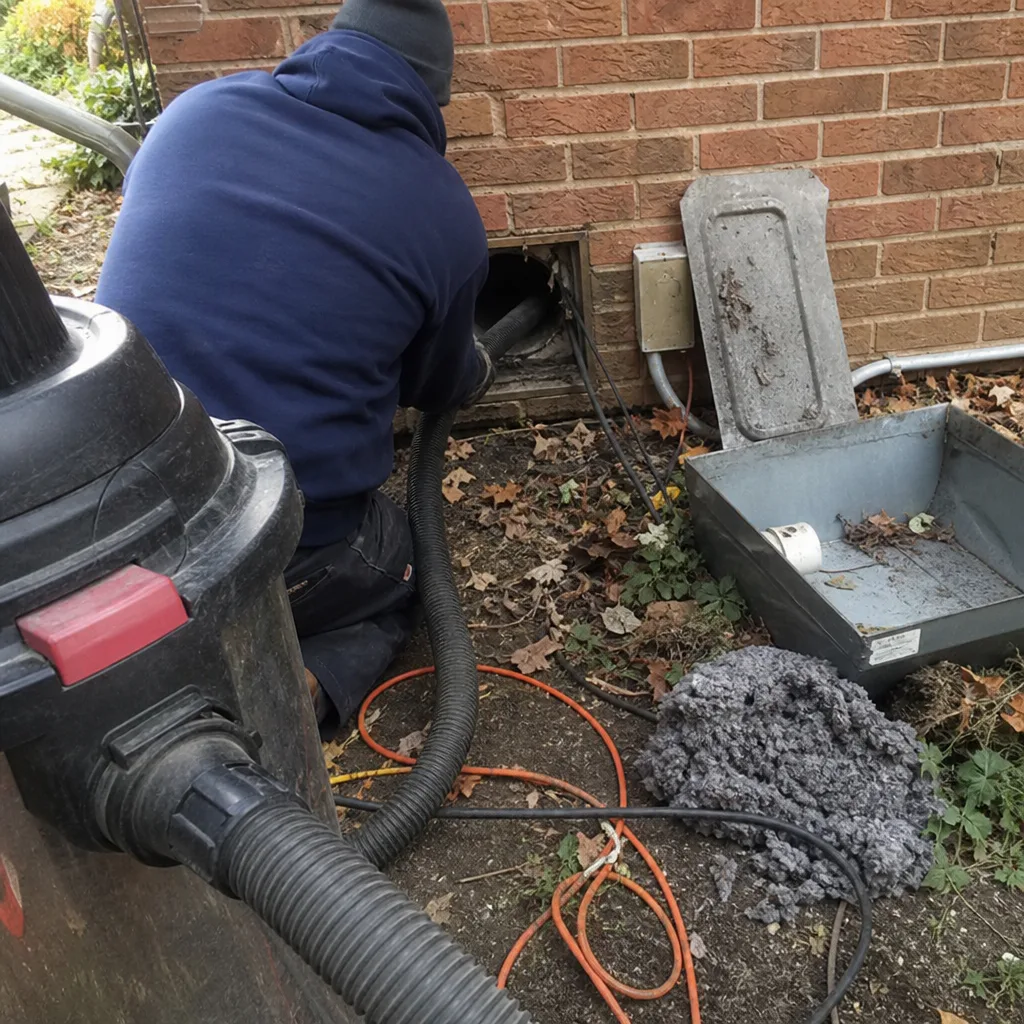 Before
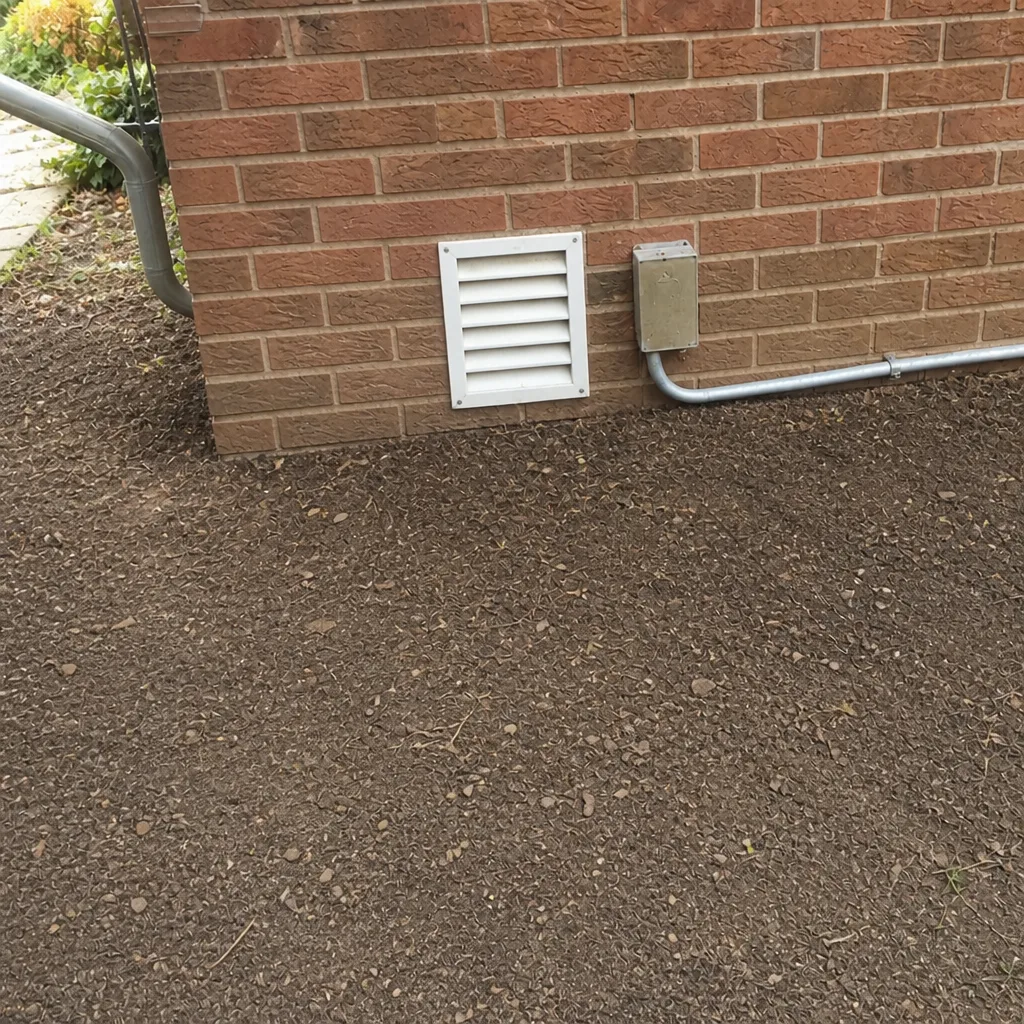 After
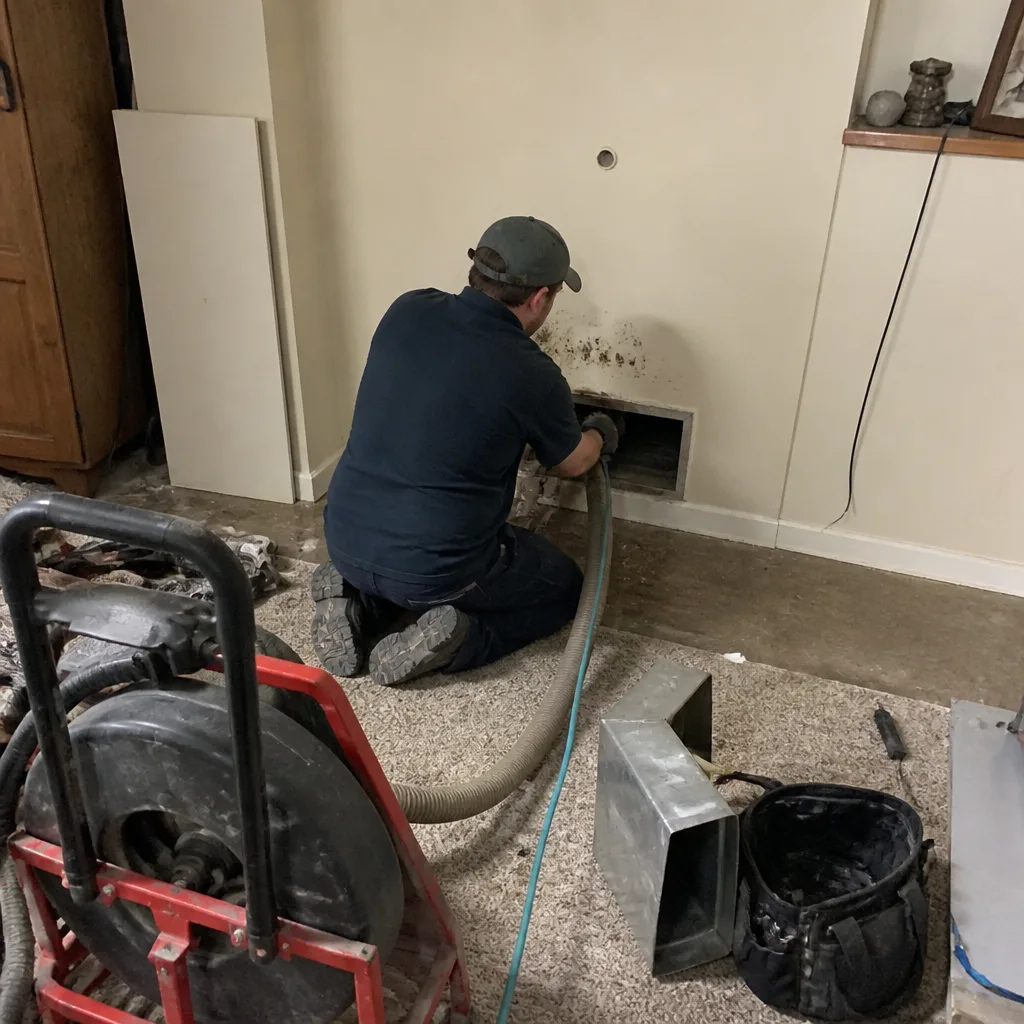 Before
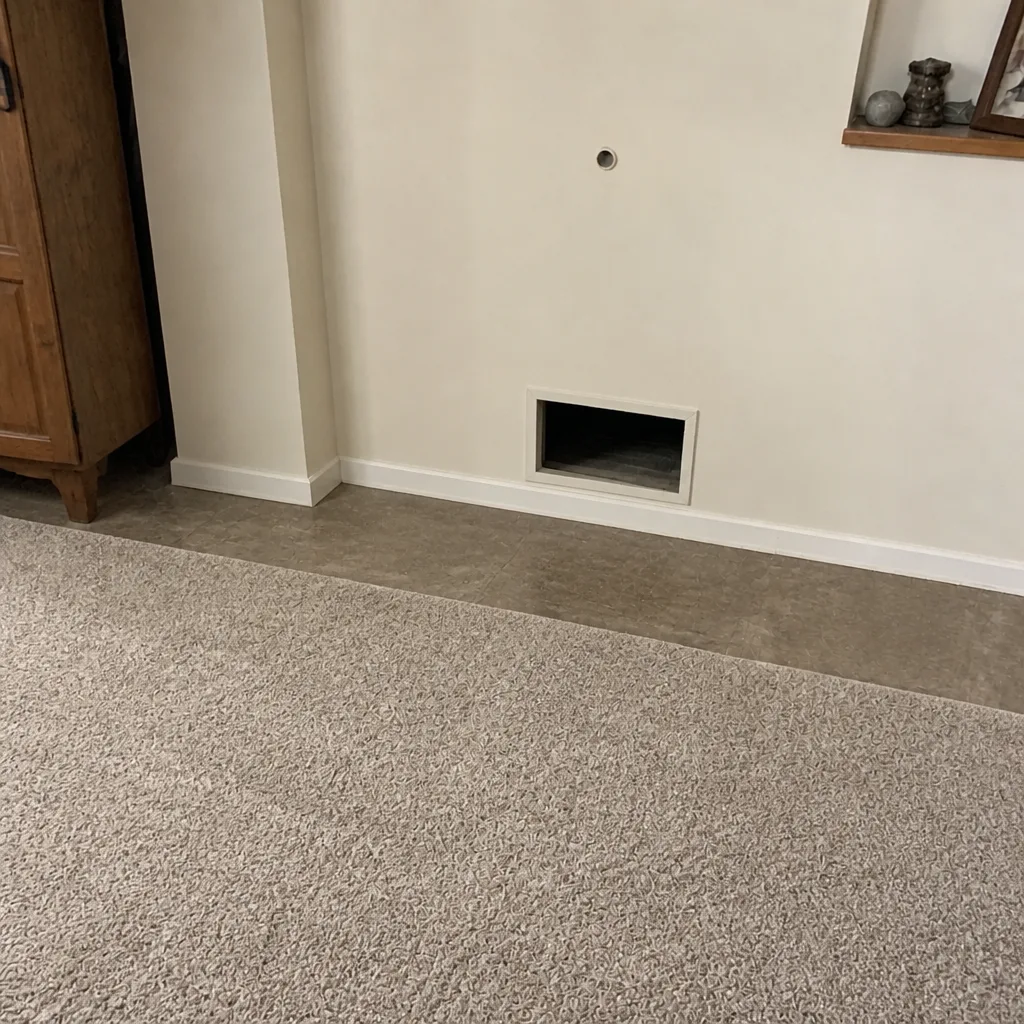 After
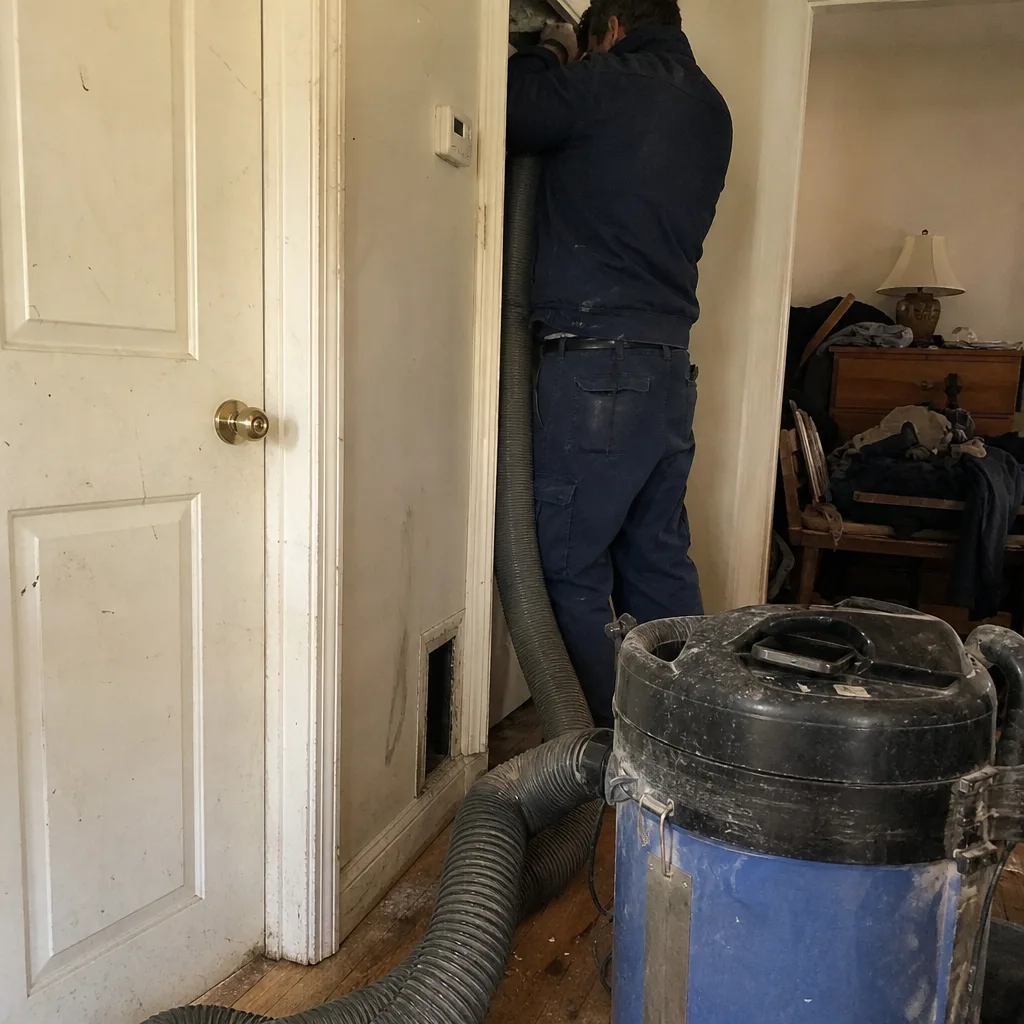 Before
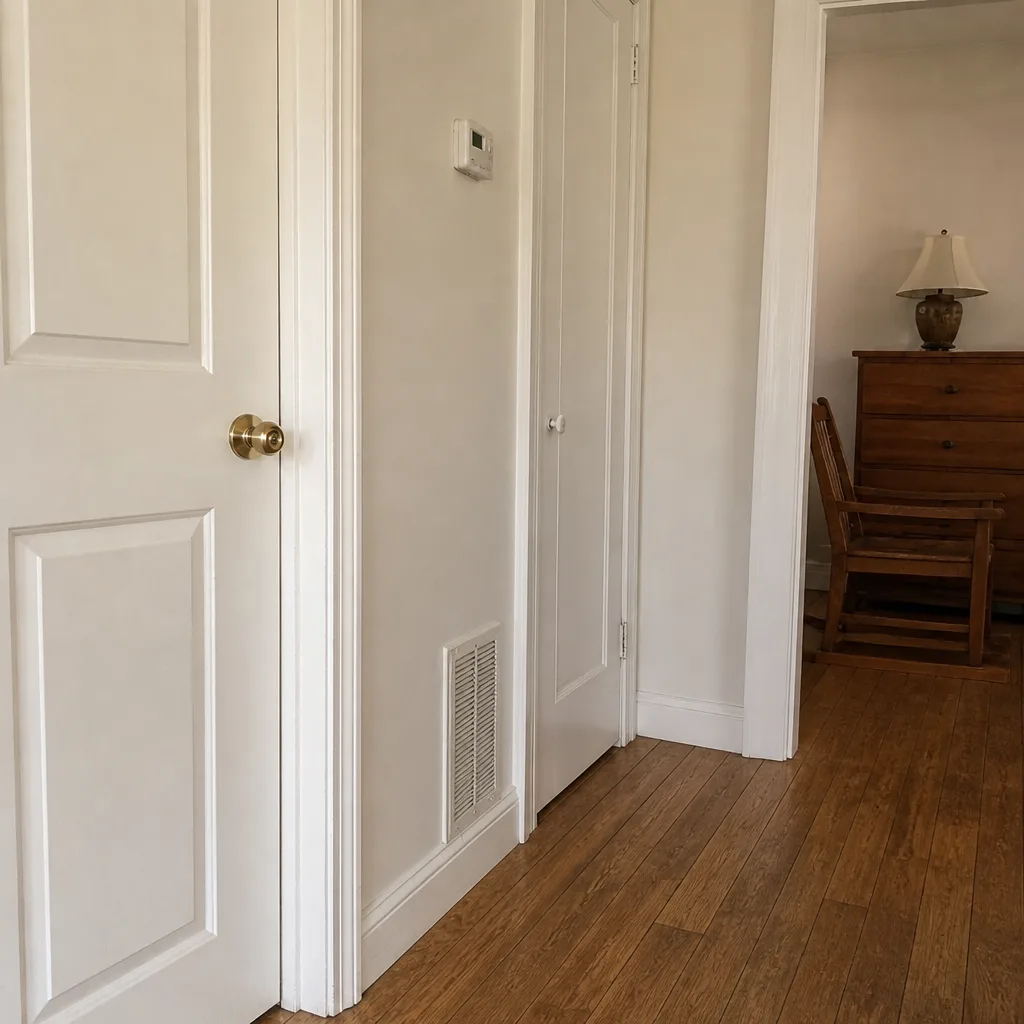 After
When to Call a Professional
Some symptoms you can document. Others need a trained technician with the right tools before you touch anything. Call a professional when you find separated flex liner, a disconnected trunk line, or a collapsed run; when a musty smell appears after the system runs in humid weather; when one room’s airflow is dramatically different from the rest and you’ve confirmed the filter is clean; when the dryer is taking longer than usual to dry a load or the laundry room feels unusually warm; or when you’ve done an inspection and found damage rather than dust. The air handler itself is also a no-go zone. Electrical components and moving parts belong to a technician, not a homeowner with a flashlight.
Dayspring Air Duct Cleaning offers free estimates in Louisville. We inspect first, tell you plainly whether you’re looking at a cleaning or a repair, and give you one price per system in writing before any work starts. Call (877) 517-3289. We answer 24/7. Fast dispatch from 7am to 7pm, Sunday through Friday.
Frequently Asked Questions
If airflow is weak everywhere and dust is consistent, you likely need cleaning; if one room is dramatically worse, or you see separated liner or disconnected joints, you likely need repair. A flashlight inspection of your accessible register boots and plenum will usually tell you which. When in doubt, have a technician inspect before cleaning.
Musty smell during cooling season usually means moisture is sitting inside the duct system, often where flex liner has separated in a humid crawl space. Louisville’s humidity is the main driver. Don’t ignore it; moisture damage gets worse over a warm season, not better.
Yes. A collapsed or disconnected run feeding a single room starves it of conditioned air, and a 5°F difference between the thermostat setting and that room is a common result. No filter change will fix it. The run needs repair or replacement.
Negative-pressure cleaning is the right method when the ductwork is intact and structurally sound. It’s the wrong method on damaged ductwork, where the pressure differential can spread debris or worsen a partial collapse. That’s why inspection comes first on every job we run.
A proper inspection of the accessible ductwork takes less time than a full cleaning and is typically scheduled as part of an overall visit. It involves checking registers, the plenum, the return, and accessible flex runs. The purpose is to decide whether you need cleaning, repair, or both.
Yes. Repeated humid summers and damp shoulders of the year cause condensation on duct surfaces in unconditioned spaces, which weakens the adhesive that holds flex duct liner to its jacket. Once the liner separates, it sags into the airflow path and traps dust. It’s a structural failure, not a cleaning problem.
What equipment should I look for in a duct cleaning company?
Look for rotary contact cleaning systems and HEPA negative-air extraction equipment. Consumer shop vacs can’t generate the pressure needed. Our work uses Rotobrush rotary contact cleaning and Nikro HEPA negative-air extraction, and we’re trained to work alongside systems like Honeywell, Aprilaire, and Abatement Technologies already installed in the home. Call (877) 517-3289 for a free estimate and we’ll show you what’s involved.
The Bottom Line
Most duct complaints are diagnosable before you call anyone. Weak airflow that’s uniform across the house points to a cleaning issue; weak airflow that’s localized points to damage in a specific run. Dust that’s even across rooms is a system-wide contamination signal; dust that’s concentrated is a leak or joint failure. Odor tells you about moisture, and in Louisville’s humid climate, moisture is what separates flex duct liner and turns a cleaning job into a repair job. Document your symptoms, shine a light into the accessible spots, and call a professional when the evidence points to damage rather than dust. When you need someone with the equipment to both clean and repair, call (877) 517-3289 for a free estimate.
Written by the team at Dayspring Air Duct Cleaning, serving Louisville since 2013.