
Last updated November 14, 2026
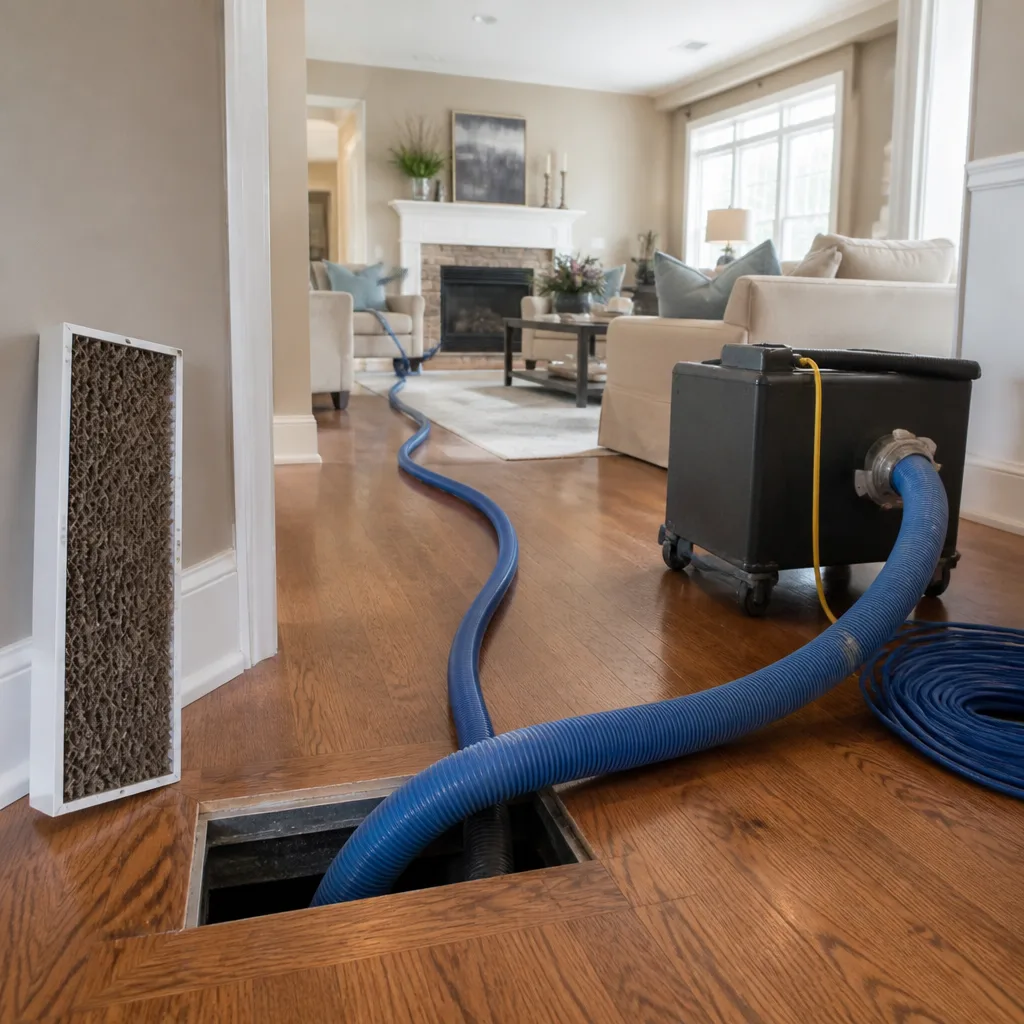 Whole-home duct cleaning
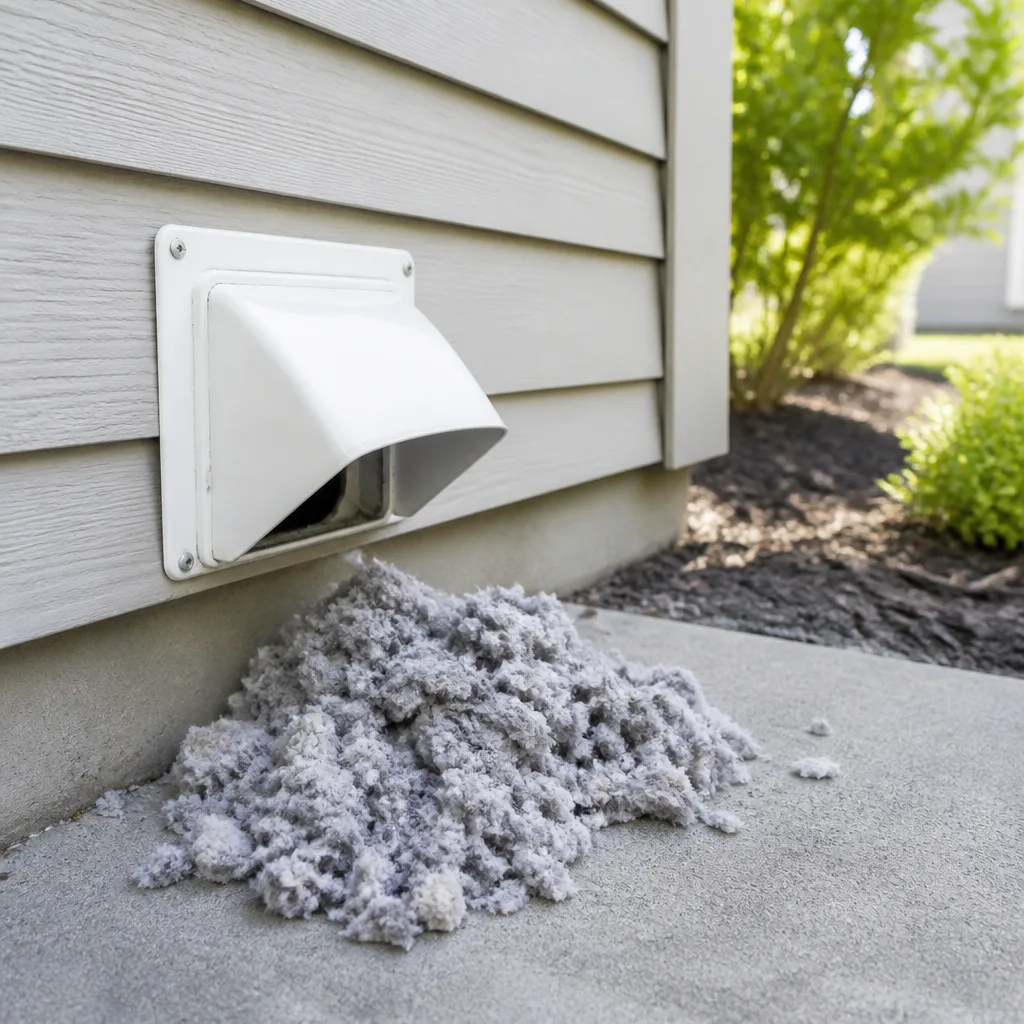 Dryer vent cleaning
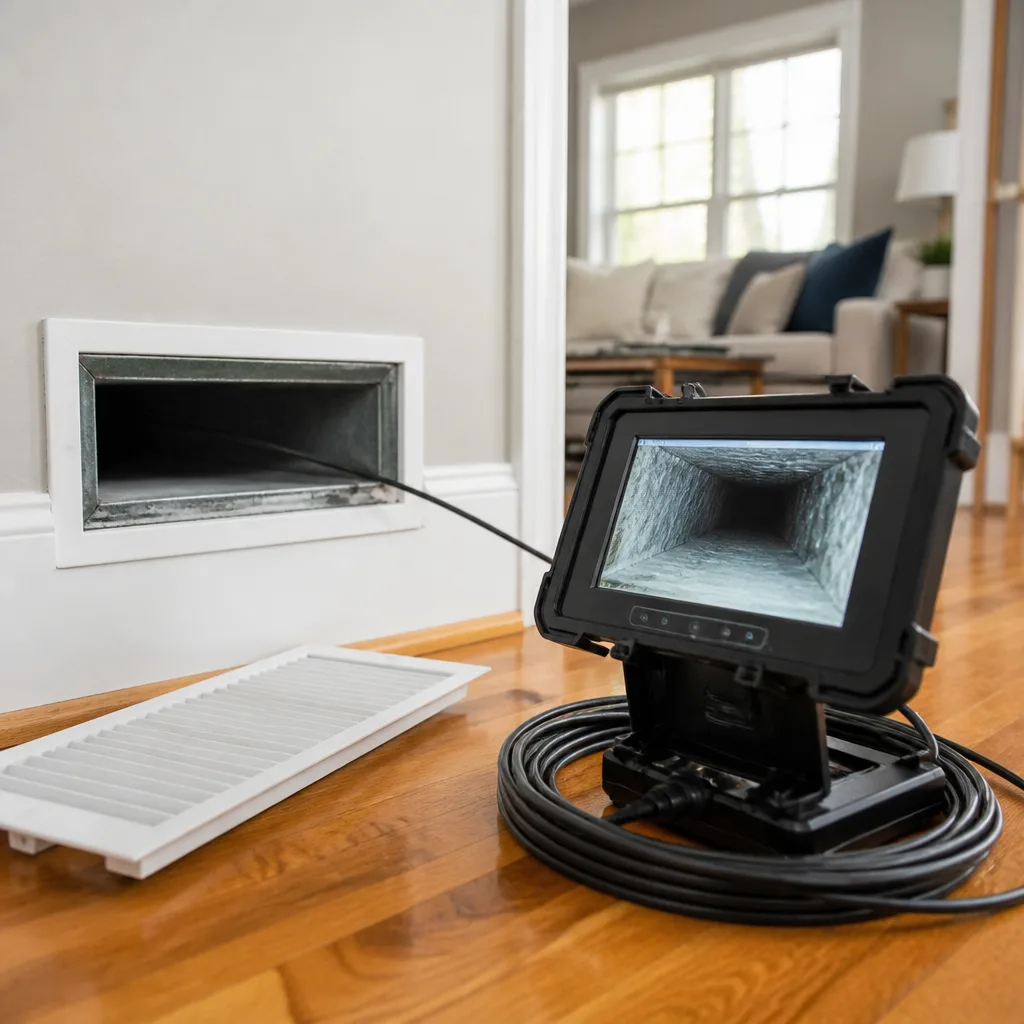 Camera inspection
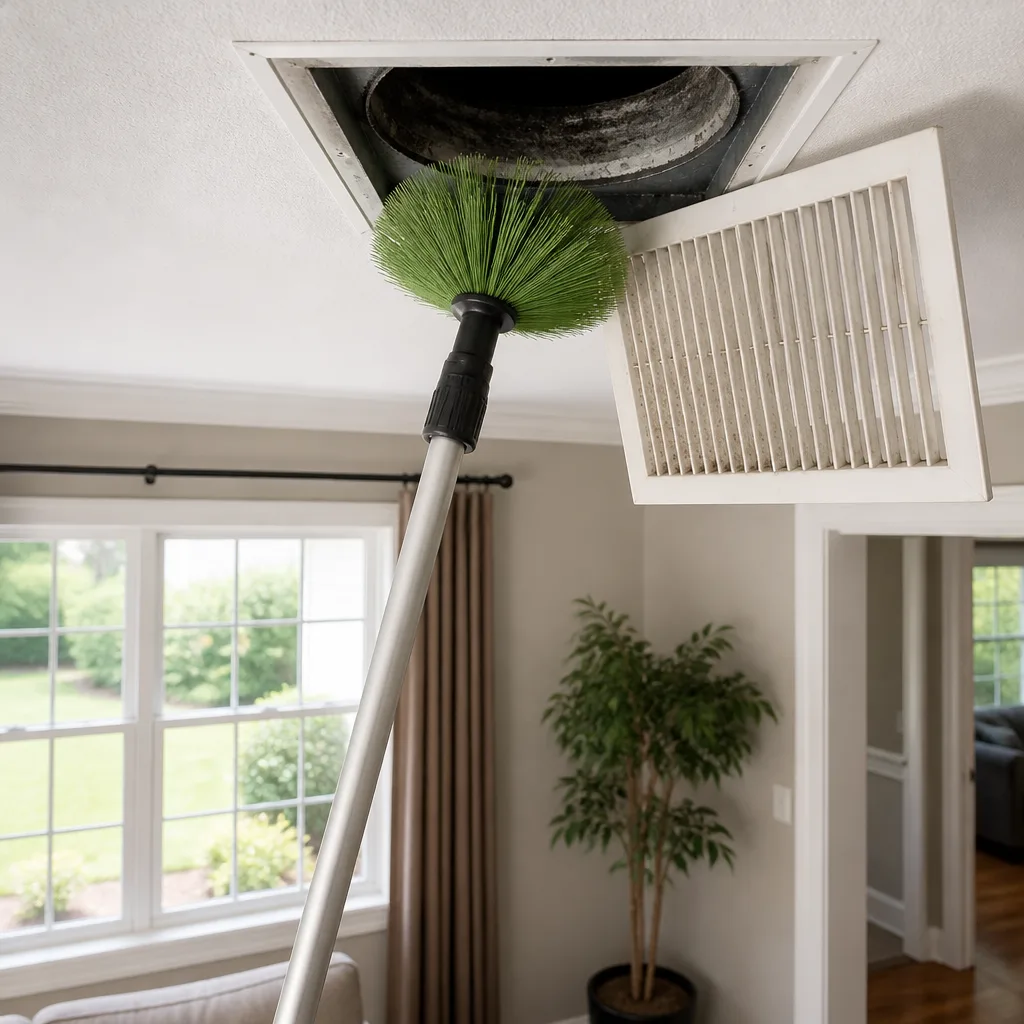 Sanitizing & deodorizing
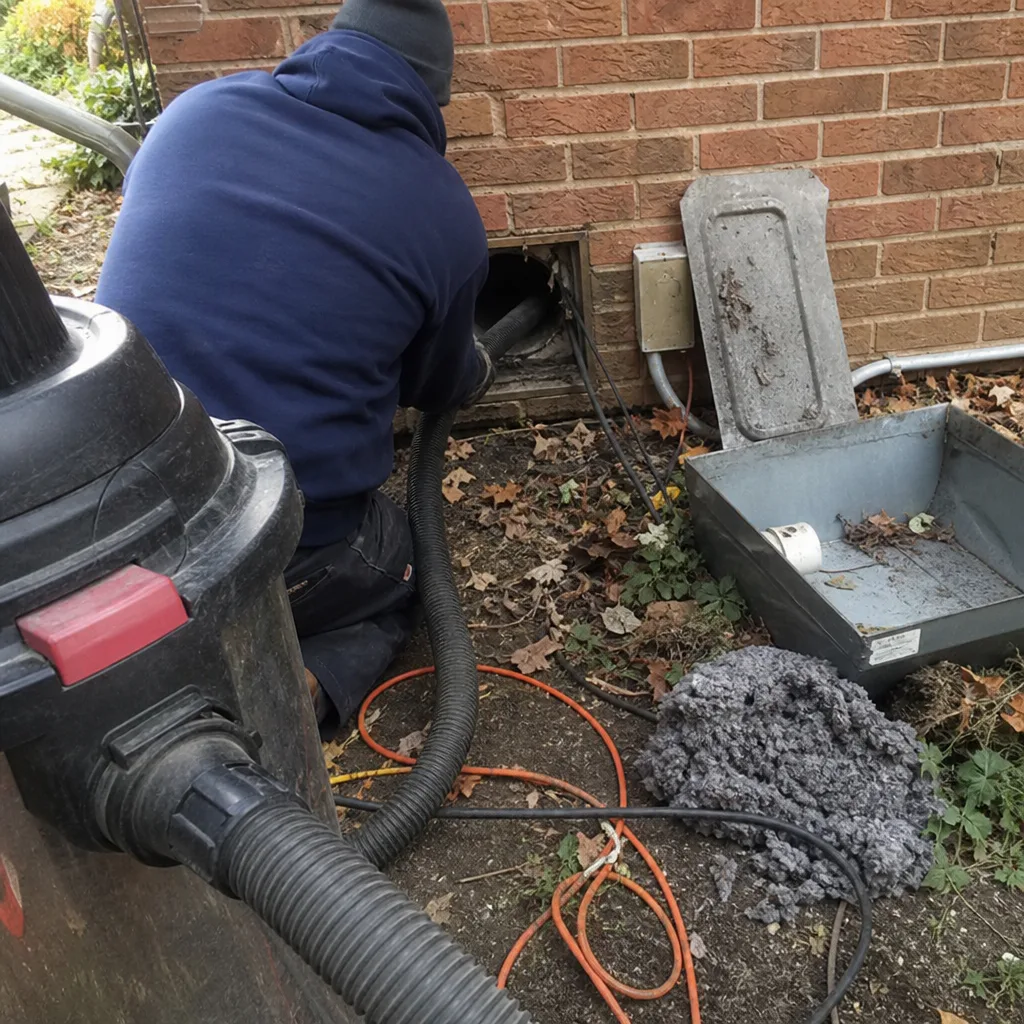
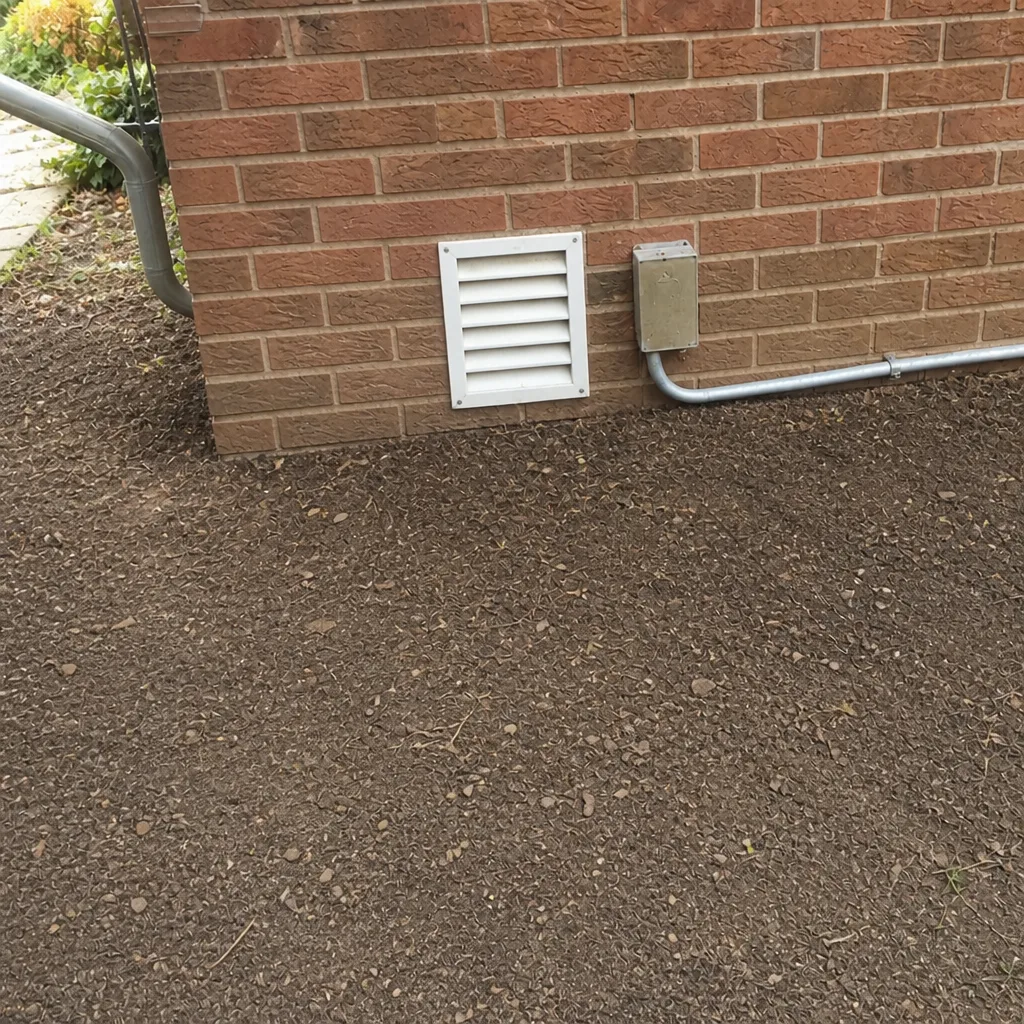
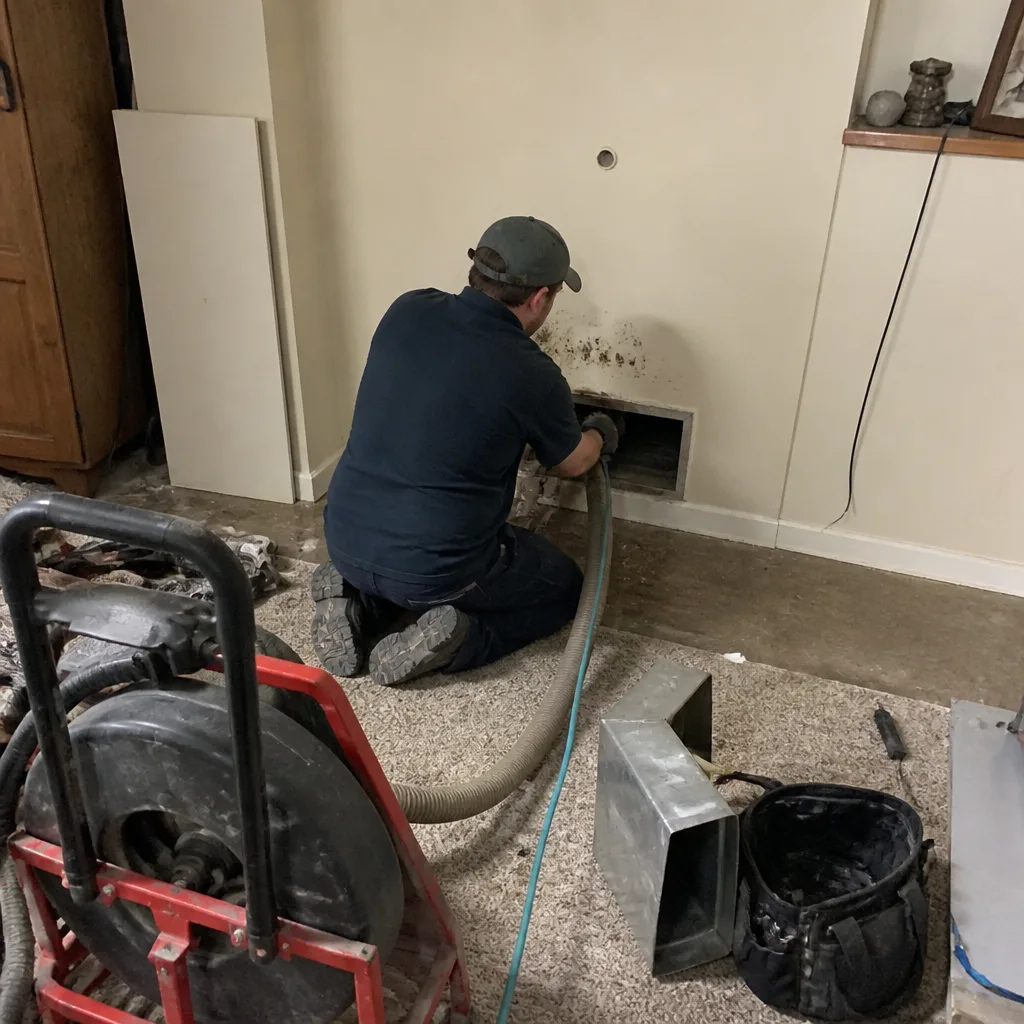
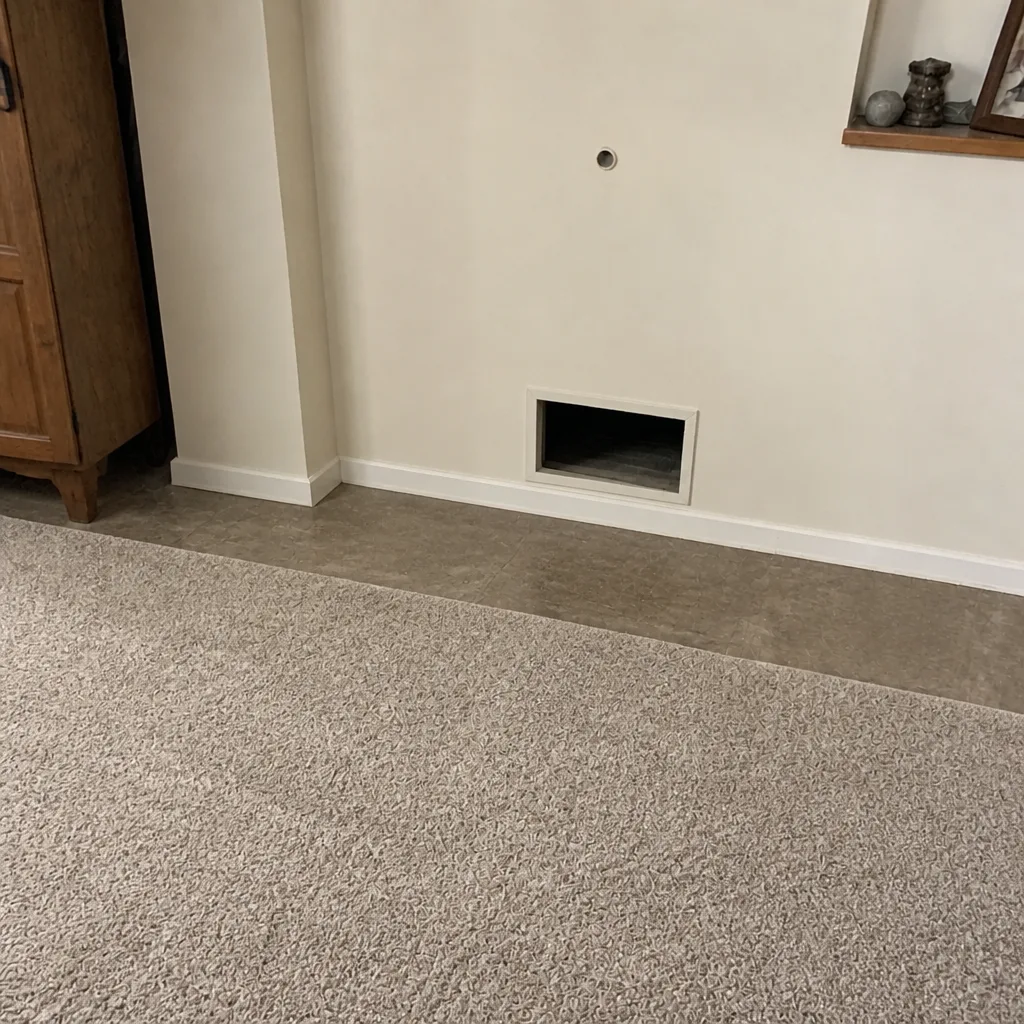
Whole-system duct and dryer vent check with before-and-after photos - you see exactly what came out of your vents
That "$99 whole-house special" is a bait ad - the real number appears once they are in your hallway, or the "clean" is a shop-vac at the register. We photograph the inside of your ducts before and after instead.
DIY vs Professional Air Duct Cleaning: The Louisville Homeowner’s Decision Guide
Here’s what surprises most people: DIY duct cleaning isn’t dangerous, and it isn’t useless. It’s just structurally incomplete. A homeowner with a $40 brush kit and a shop vac can absolutely clean the visible portion of their duct runs, and that work has real value. The trouble starts one bend deeper. Contaminant loads concentrate at turns, in the long trunk lines that feed whole floors, and on the evaporator coil, and those are exactly the spots a consumer tool can’t reach without sealed negative pressure pulling debris toward a collection point. This guide draws the honest line between what you can do well and where the physics of a duct system make professional equipment non-negotiable. It’s written from Louisville, for Louisville homes, because our housing stock has its own quirks.
Quick Answer
DIY air duct cleaning works for surface-level upkeep: grilles, accessible register boxes, dryer vent lint, and filter changes. It cannot clean trunk lines, tight bends, or the coil, and brushing those areas without a sealed HEPA vacuum actively redistributes debris into your living space. Professional cleaning earns its cost when you need the whole system addressed at once, and it’s essential after renovation or when microbial growth is confirmed. If you want the short version of what a full-system service involves, our Dayspring Air Duct Cleaning overview covers the scope.
Styles & brands we work with
- Whole-home duct cleaning
- Dryer vent cleaning
- Camera inspection
- Sanitizing & deodorizing
Table of Contents
- What a Homeowner Can Genuinely Do Well
- Why Negative Pressure Changes Everything
- The Louisville Risk: Fiberglass-Lined Ducts
- The Honest ROI: When DIY Makes Sense as a Stop-Gap
- What “Professional” Actually Means in Equipment Terms
- How to Verify the Contractor You Hire
- Common Mistakes to Avoid
- When to Call a Professional
What a Homeowner Can Genuinely Do Well
We’re not going to pretend your shop vac is worthless. Some duct-adjacent maintenance is genuinely a homeowner task, and doing it well stretches the time between professional cleanings. Here’s the work that’s within your reach and worth doing.
- Grille cleaning. Pop the supply and return grilles off, wash them in the tub with dish soap, and let them dry fully before reinstalling. Dust caked on a grille restricts airflow and blows straight back into the room. This is a 30-minute job with immediate visible payoff.
- Accessible register box cleaning. The short section of duct immediately behind each grille, often called the register boot, can be wiped down with a damp cloth. Reach in as far as your arm comfortably goes, and no further. Don’t force a brush around the first bend.
- Dryer vent cleaning. This one matters. Lint accumulation in a dryer vent is one of the NFPA’s leading causes of residential fires, and pulling the flexible transition duct behind the dryer to clear it is a legitimate DIY task. Disconnect the dryer, pull the duct, clear the lint, reconnect with a proper metal clamp, and check the exterior hood flap opens freely.
- Filter maintenance. The single highest-return thing you can do. Check your filter monthly during heavy heating and cooling seasons and replace it on the schedule your system calls for. A clogged filter starves the system and pushes dust back through the return.
Notice what’s missing from that list: anything past the first bend, anything in a trunk line, and anything involving the coil. That’s the boundary, and it’s a physical one, not a skill one.
Why Negative Pressure Changes Everything
This is the part most DIY guides skip, and it’s the whole reason professional equipment exists. When you agitate dust inside a duct with a brush or a consumer vacuum wand, you’re loosening it. But loosened dust has to go somewhere. Without a sealed vacuum pulling at the main trunk and holding the whole system under negative pressure, that debris simply moves to the next surface, settles back down when airflow resumes, or drifts out of the nearest register and into the room.
Picture the system as a tree. Your registers are the twigs at the ends of branches. The branches feed into a trunk that runs back to the air handler. Consumer tools can reach the twigs and maybe the first inch of a branch. Professional cleaning seals a HEPA negative-air machine onto the trunk, so when a rotary brush works through a branch run, every particle it breaks loose is being pulled toward the collection point, not pushed into the house.
- Seal. The vacuum connects at the main trunk or plenum, creating a closed system under negative pressure.
- Agitate. A rotary contact brush travels the full length of each run, breaking debris off the duct walls, including the bends and the trunk lines a consumer tool never reaches.
- Extract. The HEPA vacuum pulls loosened material toward the collection point while the system stays sealed, so nothing escapes into living space.
- Verify. Before-and-after photos of the actual runs confirm the work was done, not just promised.
That’s why we run Rotobrush rotary contact cleaning alongside Nikro HEPA negative-air extraction. Those are the same systems used in commercial and industrial indoor air quality work. It isn’t about having fancier toys. It’s about the sealed-system physics a shop vac can’t replicate.
The Louisville Risk: Fiberglass-Lined Ducts
Plenty of Louisville homes were built in the 1970s and 1980s, and a good number of those were fitted with fiberglass-lined ductwork, either internally lined rigid duct or flexible duct with a fiberglass core wrapped in foil. That lining does a real job. It insulates, it quiets the system, and it controls condensation. It’s also the reason aggressive DIY brushing can go wrong in a way that has nothing to do with the dirt.
Fiberglass lining is fragile. A stiff brush run hard against an internal liner can abrade the surface, and once that lining is compromised, loose fiberglass particulate becomes part of what circulates through your home. In our experience, this is the single most common way a well-intentioned DIY cleaning makes things worse in an older Louisville house.
So before you buy a brush kit, look at your ducts. If you can see a foil or silver outer wrap with a soft, fibrous interior, or if a hand-run along the outside of a duct feels soft rather than hard metal, treat that run as off-limits for DIY brushing. Professional cleaning handles lined duct with controlled-contact tooling and constant extraction, so the liner stays intact and the particulate gets captured rather than released. Louisville’s humid summers and cold winters put real stress on these systems, and a damaged liner turns a cleaning job into a repair job.
The Honest ROI: When DIY Makes Sense as a Stop-Gap
There’s a time and a place for a partial DIY cleaning, and being honest about that is more useful than telling everyone to call a pro every time. Here’s where a homeowner’s effort actually pays off.
A DIY partial cleaning makes sense as a stop-gap when the ducts are basically fine and you just want to stay on top of dust: grilles dusty, a faint musty smell you suspect is the return register, a recent move into a home where the previous owner’s habits are unknown. Cleaning the accessible surfaces buys you time and costs almost nothing.
It stops making sense, and starts being counterproductive, under a few specific conditions:
- Post-renovation debris. Drywall dust, sawdust, and construction grit settle deep in branch runs and trunk lines. Brushing the accessible ends just churns that fine dust into the air you’re breathing. Renovation debris needs whole-system extraction.
- Confirmed microbial growth. If you can see or smell actual mold, this is no longer a cleaning question. Surface agitation spreads spores. A professional assessment comes first, and remediation may be a separate scope entirely.
- Suspected fiberglass damage. If you’ve already brushed a lined duct and now notice fibrous dust at the registers, stop. That’s a repair and cleaning job together.
- A system that’s never been cleaned in a home you just bought. You don’t know what’s in there, and discovering it with a consumer vacuum is the wrong order of operations. See what’s inside your system before you start.
For the full picture on timing and scope, our guide to air duct cleaning walks through what a whole-system job involves from start to finish.
What “Professional” Actually Means in Equipment Terms
Here’s an uncomfortable truth: the word “professional” on a van doesn’t guarantee professional equipment. Some operators show up with a shop vac and a long hose, run it over the registers, and call it a cleaning. So it’s worth knowing what capability should look like, so you can ask the right questions before you hire.
A real whole-system cleaning has three components working together.
- A sealed negative-air HEPA vacuum connected at the main trunk, holding the entire system under negative pressure for the duration of the job. Nikro negative-air machines are built for exactly this.
- Rotary contact cleaning tooling that travels the full length of each duct run and physically breaks debris off the walls, bends and all. Rotobrush systems are the standard for this in residential work.
- Verification, meaning before-and-after photos of your actual runs, not stock images of someone else’s ducts.
There’s a fourth piece that separates a full-service provider from a vacuum-and-leave operation: repair capability. If the technician finds a disconnected joint, a crushed flex run, or compromised lining, can they fix it, or do they hand you a report and a second contractor’s phone number? We repair what we find, not just report it, because the cleaning is only as good as the system’s integrity afterward. We also work alongside filtration equipment from Honeywell and Aprilaire that’s already installed in Louisville homes, so cleaning and air quality hardware don’t fight each other.
How to Verify the Contractor You Hire
Ask these questions before anyone walks in the door. A contractor who can answer them plainly is one you can trust with your system.
- “What vacuum do you bring?” You want to hear HEPA and negative air, connected at the trunk. Not “a really strong shop vac.”
- “Do you clean the trunk lines and the coil, or just the branch runs?” Branch-only cleaning skips the spots where contaminant loads actually concentrate.
- “Can I see before-and-after photos of my own ducts?” This is the single best defense against the bait-and-switch reputation this trade has earned.
- “Is the price per system or per vent?” Per-vent pricing is how a reasonable quote grows into a large invoice once the equipment is set up. We quote one flat price per system, agreed before work starts.
- “Can you repair a problem if you find one?” Ask directly. If the answer is no, you may end up hiring someone else anyway.
If you’re comparing us against another local company, this is also a fair way to compare. Our Louisville service page lays out our scope clearly, and we’re glad to answer every one of the questions above on the phone before you book.
Common Mistakes to Avoid
- Brushing lined ductwork. If your ducts have a soft fiberglass interior, a stiff brush can abrade the lining and release particulate into your air. Check before you brush, especially in 1970s and 1980s Louisville homes.
- Vacuuming without sealing the system. Running a shop vac over registers without negative pressure at the trunk just stirs dust and lets it resettle. You’re redistributing, not removing.
- Cleaning right after a renovation with a consumer tool. Fine drywall and sawdust settle deep. DIY agitation lifts it into the air you breathe. Wait, or have the whole system extracted properly.
- Ignoring the dryer vent. It’s the easiest legitimate DIY win, and lint buildup is one of the NFPA’s leading causes of residential fires. Clear the transition duct and check the exterior hood flap opens freely.
- Skipping the filter while chasing duct dirt. A clogged filter is a bigger airflow problem than a dusty duct. Change it on schedule before you blame the ducts.
- Accepting a per-vent quote that grows. Get one flat price per system, in writing, before equipment gets set up. If it’s per vent, ask what happens when vent count goes up.
- Hiring without seeing proof. Ask for before-and-after photos of your own runs. No photos, no confidence.
When to Call a Professional
Call a professional when the scope of what you need goes past your reach, and that’s more often than DIY guides admit. The clear cases: after a renovation, when confirmed microbial growth is present, when you’ve bought a home with unknown duct history, when a musty smell returns after you’ve cleaned the grilles, or when you’ve noticed fibrous dust at the registers and suspect lining damage. Any of those means the full system needs proper negative-pressure extraction and, likely, repair. Same-day service is available when the job calls for it, and estimates are free.
Dayspring Air Duct Cleaning offers free estimates in Louisville. Call (877) 517-3289. We answer 24/7. Fast dispatch from 7am to 7pm, Sunday through Friday. One flat price per system, agreed before work starts, and before-and-after photos of your own ducts when we’re done.
See the difference
 Before
 After
 Before
 After
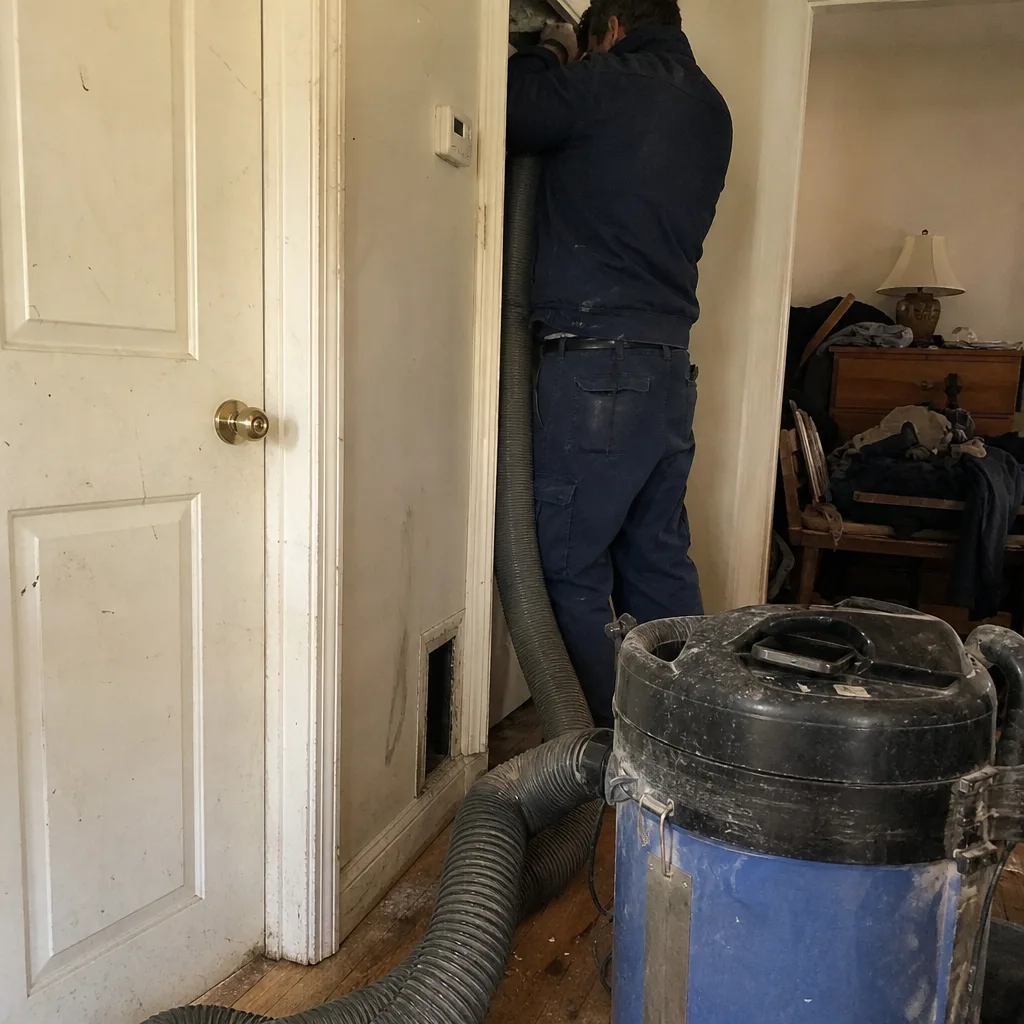 Before
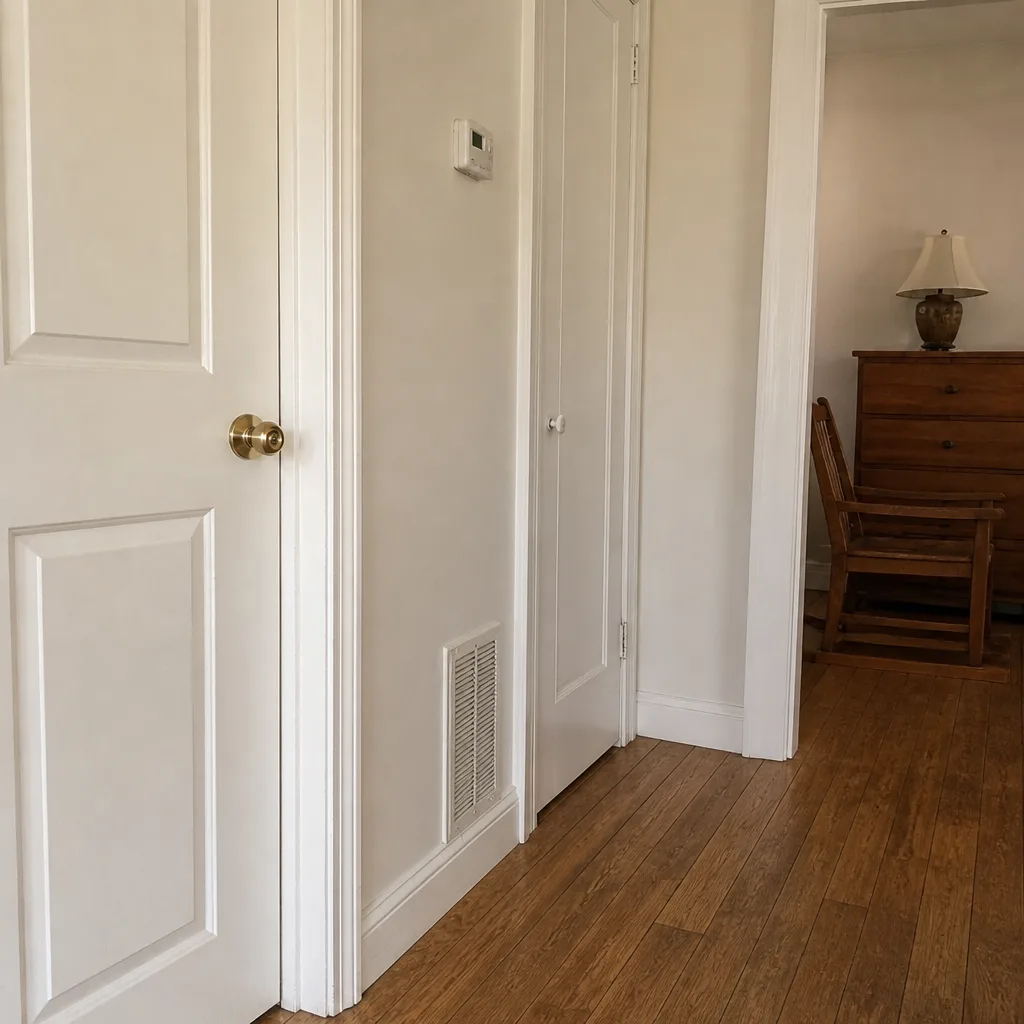 After
Frequently Asked Questions
You can clean the grilles, the accessible register boxes, and the short section behind each register, and that work has value. You cannot clean trunk lines, tight bends, or the coil without a sealed negative-air vacuum pulling debris toward a collection point. Attempting those areas with a consumer tool redistributes dust into your living space rather than removing it.
It varies with system size, number of runs, and whether repair is needed, so any responsible contractor quotes after seeing the system. We give one flat price per system, in writing, before work starts, and it never depends on a per-vent count. Call (877) 517-3289 for a free estimate. Estimates are free and there’s no pressure to book.
Usually because the scope is much smaller: a shop vac at the registers, no sealed HEPA vacuum, no trunk-line cleaning, no coil work, no photos. It looks like a bargain until you realize the parts that matter weren’t touched. Ask what equipment they bring and whether they clean the trunk lines. The answers tell you what you’re actually buying.
Ask for before-and-after photos of your own ducts, not stock images. That’s the clearest proof, and it’s what we provide. If a contractor can’t show you your own system before and after, you have no way to verify the job beyond their word.
No, and this is the local risk worth knowing. Many Louisville homes built in the 1970s and 1980s have fiberglass-lined ductwork, and an aggressive brush can abrade that lining and release particulate into your air. If your ducts have a soft fibrous interior, don’t brush them. Have them cleaned with controlled-contact tooling and constant extraction instead.
There’s no universal schedule, and anyone who quotes you one without looking at your system is guessing. The practical triggers are a renovation, confirmed growth, a move into a home with unknown history, a persistent musty smell, or visible debris at the registers. Otherwise, filter changes and grille cleaning handle routine upkeep. Call (877) 517-3289 and we’ll help you decide whether it’s actually time.
The Bottom Line
DIY duct cleaning isn’t dangerous, and for grilles, accessible registers, dryer vents, and filters, it’s genuinely worthwhile. It’s just incomplete, and the incompleteness is a physics problem, not a skill gap. Without sealed negative pressure at the trunk, agitating debris past the first bend redistributes it rather than removing it. In older Louisville homes with fiberglass-lined ducts, aggressive brushing can do real harm. So draw the line honestly: handle the surface upkeep yourself, and bring in a crew with Rotobrush rotary contact tooling and Nikro HEPA negative-air extraction when the trunk lines, the coil, or a confirmed problem needs addressing. One flat price per system, agreed before work starts, and before-and-after photos of your own ducts.
Written by the team at Dayspring Air Duct Cleaning, serving Louisville since 2013.